Email: info@oudreywatertank.com
Whatsup: +86159 1014 5521
Nearly half of global green steel projects are delayed as funding gaps and weak demand threaten the industry's decarbonization goals.
At the global steel industry’s annual conference held in Singapore this week, representatives from steel associations and industry executives worldwide expressed growing concerns over the future of green steel development.
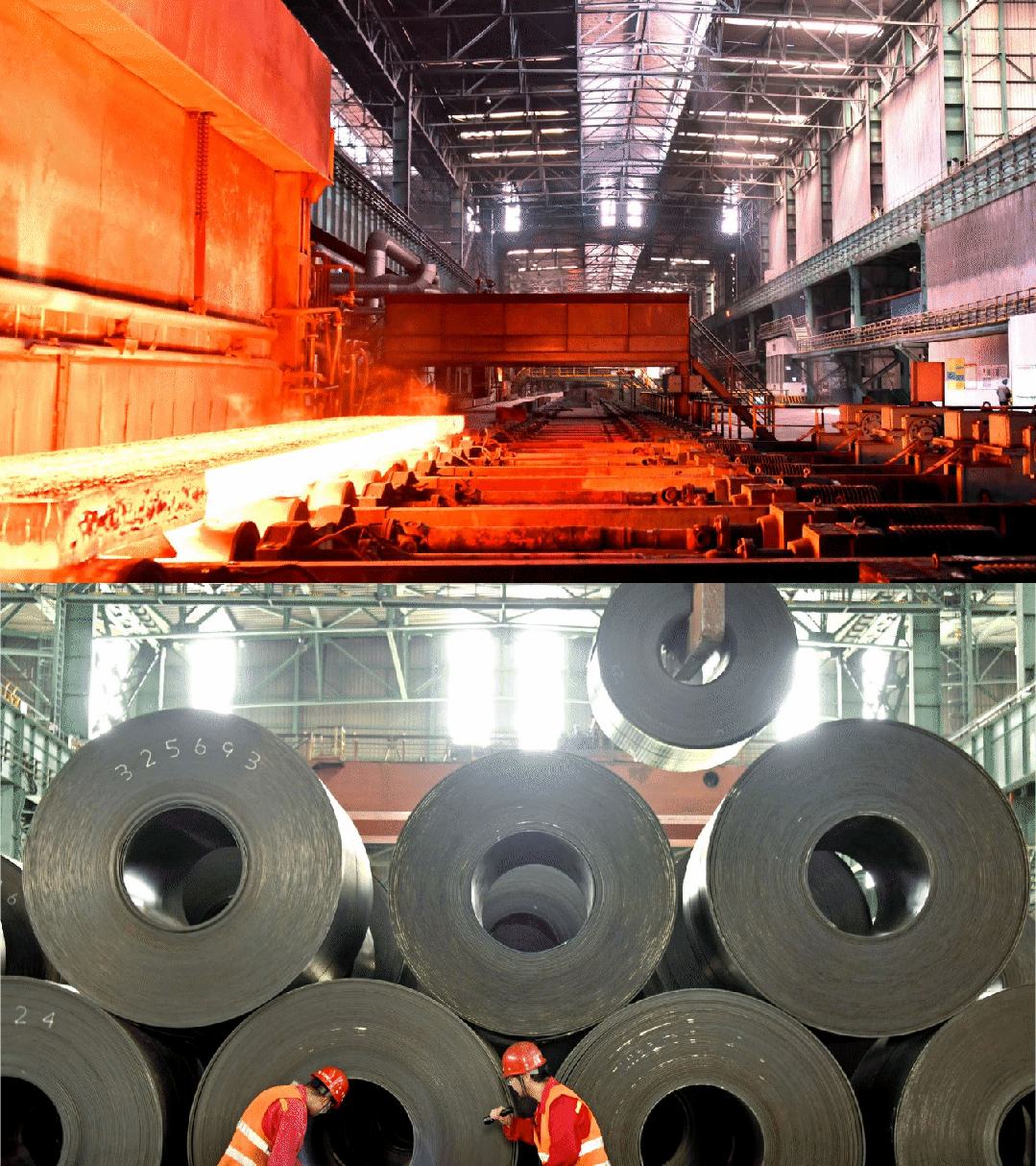
Industry experts noted that high investment costs, delayed infrastructure development, and insufficient market demand have significantly slowed the progress of green steel projects, putting the steel sector’s decarbonization efforts under unprecedented pressure.
According to the latest data released by the World Steel Association, nearly half of the planned green steel projects worldwide have experienced various degrees of delay. Achieving full decarbonization of the steel industry is estimated to require approximately US$1.5 trillion in investment, while governments have so far pledged only around US$200 billion in support—less than one-seventh of the total funding needed. The substantial financing gap has become one of the biggest obstacles to the industry’s transition.
Since the beginning of 2026, several landmark green steel projects have encountered significant setbacks. Sweden-based Stegra’s hydrogen-based green steel project, after exhausting US$7.15 billion in development funding and receiving a €296 million subsidy from the European Union, was forced to reopen financing in April. A US$1.4 billion rescue package led by Sweden’s Wallenberg investment group has prompted a reassessment of the project’s planned 2026 start-up schedule.
In Europe, one of the world’s largest steelmakers, ArcelorMittal, has canceled its flagship low-carbon steel project in Germany and slowed investment plans in France and Belgium. Germany’s Salzgitter AG has postponed the next phase of its SALCOS green steel project, valued at more than €1 billion, by three years despite receiving an additional €322 million in government support.
The UK market is also facing challenges. On June 7, Tata Steel announced that its £1.25 billion green steel project in the United Kingdom would be delayed by six to eight months due to setbacks in the delivery of national grid power infrastructure.
In the Americas, U.S. startup Boston Metal has been forced to cut jobs after equipment failures at its Brazilian plant caused a key financing deal to collapse, further highlighting the technical and financial challenges confronting green steel initiatives.
World Steel Association Deputy Director General Zhong Shaoliang stated that despite the steel industry’s emission reduction commitments over the past decade, the carbon intensity of global steel production has seen little meaningful decline. Based on the current pipeline of projects under construction and development, global green steel production capacity is expected to reach only around 70 million tonnes annually by 2030, accounting for less than 4% of the projected global steel output of 2 billion tonnes.
Industry observers warn that unless financing conditions, energy infrastructure, and end-market demand improve substantially, the global steel industry’s deep decarbonization goals could be pushed further into the future, and the green transition may face a significant slowdown or even the risk of stagnation.