Email: info@oudreywatertank.com
Whatsup: +86159 1014 5521
Critical mineral supply chains are shifting toward greater security, reshaping global manufacturing and stainless steel production.
In 2026, global critical mineral supply chains are undergoing a transformation that goes far beyond simply finding new sources of raw materials.
According to the International Energy Agency (IEA), efforts by countries to diversify critical mineral supply chains have not significantly reduced concentration in refining and processing. In many areas, supply chains have become even more concentrated.
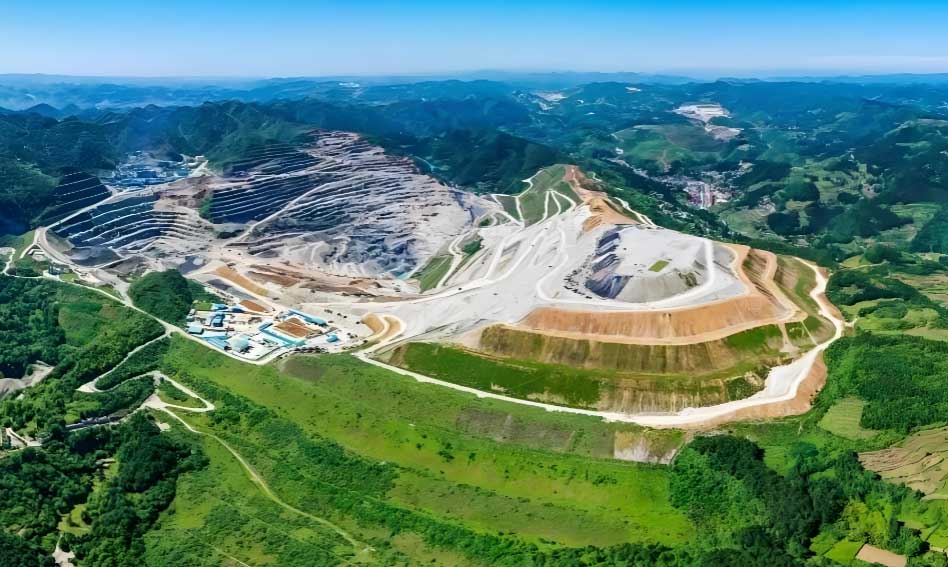
The IEA reports that between 2023 and 2025, the leading refining countries accounted for more than three-quarters of the growth in global refined supply of key energy minerals. Indonesia accounted for most of the growth in nickel supply, while China remained the leading refining country for most other critical energy minerals. In 2025, the concentration of refined supply increased further for most critical minerals, excluding rare earth elements.
For global manufacturing, this means that critical minerals are no longer simply commodities. They are increasingly becoming strategic resources that affect industrial production, technological competition, and supply chain security.
Modern manufacturing depends on critical minerals such as lithium, nickel, cobalt, graphite, manganese, rare earth elements, and gallium. These materials are widely used in electric vehicles, batteries, semiconductors, renewable energy equipment, electronics, aerospace, and defense industries.
The challenge is that these supply chains are not evenly distributed around the world.
The IEA indicates that China accounts for more than 90% of global refined supply in several critical mineral processing areas, including gallium, graphite, manganese, and rare earth elements.
For downstream manufacturers that rely heavily on these materials, disruptions involving trade restrictions, logistics, or geopolitical risks can quickly spread throughout the industrial supply chain.
This helps explain why the United States, the European Union, and other economies are increasingly promoting critical mineral supply chain diversification.
In the past, supply concentration was often regarded as a potential risk.
Recent changes in trade policies, however, show that these risks are beginning to affect actual markets.
The IEA notes that export restrictions on minerals have increased significantly. China has introduced export controls covering certain rare-earth-related items, while the Democratic Republic of the Congo has used export restrictions and quotas affecting cobalt supply. Other resource-producing countries are also strengthening their management of domestic mineral resources.
For manufacturers, this means that simply comparing which supplier offers the lowest price is no longer sufficient.
Companies increasingly need to consider:
Supply chain management is therefore becoming an increasingly important part of corporate strategy.
Another important trend is emerging in the critical minerals market.
Global investment in critical minerals declined in 2025, while capital expenditure in battery metals also fell significantly. At the same time, electric vehicles, battery energy storage, renewable energy, and grid infrastructure continue to drive demand for critical minerals.
The IEA expects demand for many critical minerals to continue growing substantially through 2040 under stated policy scenarios, with lithium demand showing particularly strong growth.
This creates a new market tension:
Growing demand → cautious investment → limited new supply → higher supply concentration → greater price and supply risks.
If this trend continues, some critical minerals may remain in relatively tight supply-demand conditions for an extended period.
The policy changes in the United States are particularly significant.
In 2025, the United States introduced measures to accelerate the approval of domestic mineral projects and expanded the concept of mineral production to include mining, processing, refining, smelting, and critical mineral derivative products.
The scope therefore goes far beyond extracting ore.
The United States is increasingly focused on establishing a complete industrial chain:
Resources → Processing → Refining → Materials → Components → Finished Products
This indicates that the objective is not simply to increase domestic mining capacity, but to establish a more complete and resilient critical mineral supply chain.
This is one of the most important developments in the current restructuring of global supply chains.
The European Union’s Critical Raw Materials Act reflects a similar strategy.
The EU has established several targets for 2030, including:
The EU is also promoting strategic projects, joint purchasing, financing, recycling, and supply chain diversification.
This means that procurement standards in European markets may increasingly consider:
Source of supply + processing location + traceability + recycling capability + supply chain security
rather than focusing solely on product price.
This is an important change for global manufacturing.
Traditional industrial competition has largely focused on:
Raw Material Cost → Manufacturing Cost → Product Price
With the restructuring of critical mineral supply chains, companies increasingly need to consider:
Raw Material Cost + Supply Chain Risk + Trade Policy + Energy Cost + Logistics Cost + Strategic Security
As a result, overseas projects with higher production costs than Chinese supply chains may still receive long-term investment if they are supported by government subsidies, long-term purchasing agreements, strategic stockpiles, or price-support mechanisms.
This means that Chinese manufacturers may face a new type of competition.
It may no longer be simply:
“Who can manufacture at the lowest cost?”
Instead, it may increasingly become:
“How do market cost and strategic supply chain security compare?”
China has significant advantages in critical mineral processing and manufacturing supply chains. At the same time, Chinese companies need to further strengthen the resilience of their industrial chains.
For manufacturers, competitiveness will increasingly depend on several factors.
Companies can no longer focus only on current purchase prices. They need to develop long-term supplier networks and evaluate the risks associated with different materials and suppliers.
The advantage of raw materials becomes more sustainable when it is transformed into stable processing capabilities and higher-value products.
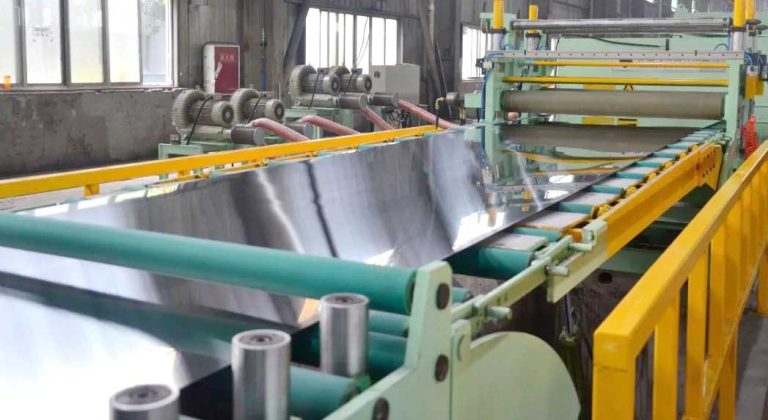
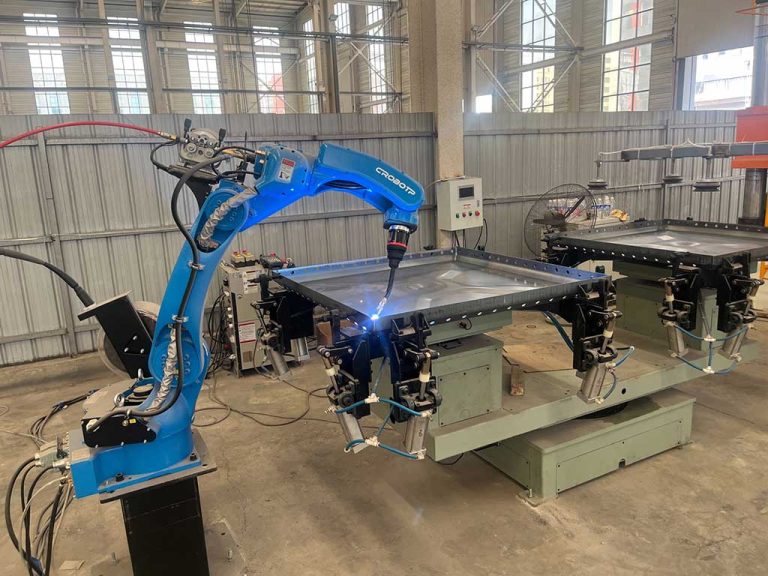
As a result, stainless steel cold rolling, precision processing, steel plate forming, welding, pipe manufacturing, and component processing are becoming increasingly important.
When raw material prices and supply risks increase, improving material utilization, reducing production waste, and optimizing manufacturing processes can directly reduce overall costs.
Chinese manufacturers will increasingly need to serve international markets by developing overseas sales, logistics, and service networks.
For export-oriented manufacturers, stable delivery and localized service capabilities will become increasingly important competitive advantages.
Although discussions about critical minerals often focus on lithium, cobalt, nickel, graphite, and rare earth elements, their impact can also spread to traditional metal manufacturing industries.
The stainless steel industry itself depends heavily on upstream raw materials.
For example:
Nickel, chromium and other raw materials
↓
Stainless Steel Production
↓
Hot Rolling
↓
Cold Rolling
↓
Stainless Steel Coils and Sheets
↓
Stamping, Welding, Cutting and Deep Processing
↓
Water Tanks, Storage Tanks, Piping and Industrial Equipment
Changes in global mineral supply chains can therefore eventually affect the cost and availability of stainless steel sheets, coils, and downstream stainless steel products.
This is also one reason why China’s stainless steel industry is moving beyond simple capacity expansion toward cold rolling, precision processing, and high-end manufacturing.
For modular stainless steel water tank manufacturers, supply chain stability is particularly important.
SUS304 and SUS316 stainless steel, for example, require reliable access to qualified stainless steel sheets while manufacturers also need to control sheet thickness, surface quality, forming performance, and consistency between different material batches.
Large modular water tank projects typically involve large quantities of panels, flanges, reinforcing structures, bolts, and other components.
Stable material supply and a mature processing system can therefore directly affect:
As China’s stainless steel industry continues to develop toward deeper processing, downstream manufacturers can benefit from a more complete supply chain for stainless steel sheets, coils, pipes, components, and processing services.
For decades, global manufacturing has focused heavily on cost and efficiency.
Companies have generally sought the lowest-cost raw materials, components, and manufacturing locations worldwide.
The restructuring of critical mineral supply chains is now creating a different approach:
The lowest cost does not necessarily mean the lowest risk.
Future manufacturing supply chains are likely to pursue three objectives simultaneously:
Cost, efficiency, and security.
For Chinese manufacturers, this represents both a challenge and an opportunity.
China already has a comprehensive industrial system, mature material supply chains, and extensive manufacturing capabilities. The next stage is not simply about increasing production capacity, but about improving deep-processing capabilities, product value, supply chain resilience, and global service capabilities.
For manufacturers of stainless steel sheets, water tanks, storage tanks, and other metal products, future competition will increasingly focus on stable material supply, advanced processing capabilities, product quality, delivery performance, and global service.
Global critical mineral supply chains are being restructured, and manufacturing competition is moving beyond simple price competition toward a more complex competition between integrated industrial supply chains.
Global manufacturing demand for critical minerals such as lithium, nickel, cobalt, graphite, and rare earth elements continues to grow, while mining, processing, and refining remain highly concentrated. Export restrictions, changes in investment, and geopolitical and economic factors are increasing supply chain risks. As a result, countries are promoting diversified supply sources and increasing domestic mining, processing, refining, and recycling capabilities.
China plays an important role in the processing and refining of various critical minerals and is an essential part of global manufacturing supply chains. China has particularly strong processing and supply capabilities in areas such as graphite, gallium, manganese, and certain rare-earth-related materials. Therefore, changes in global supply chains can have a direct impact on Chinese manufacturing.
Stainless steel production is closely linked to important raw materials such as nickel and chromium. Changes in mineral supply, smelting, and processing may affect the cost and availability of stainless steel raw materials and eventually impact downstream products, including cold-rolled sheets, steel coils, stamping, welding, and stainless steel water tanks.