Email: info@oudreywatertank.com
Whatsup: +86159 1014 5521
China’s stainless steel industry is shifting toward deep processing, high-end manufacturing, and integrated supply chains, strengthening global material supply.
In 2026, China’s stainless steel industry is continuing to move beyond traditional raw material and basic steel production toward cold rolling, precision processing, seamless pipes, composite materials, precision components, and finished products.
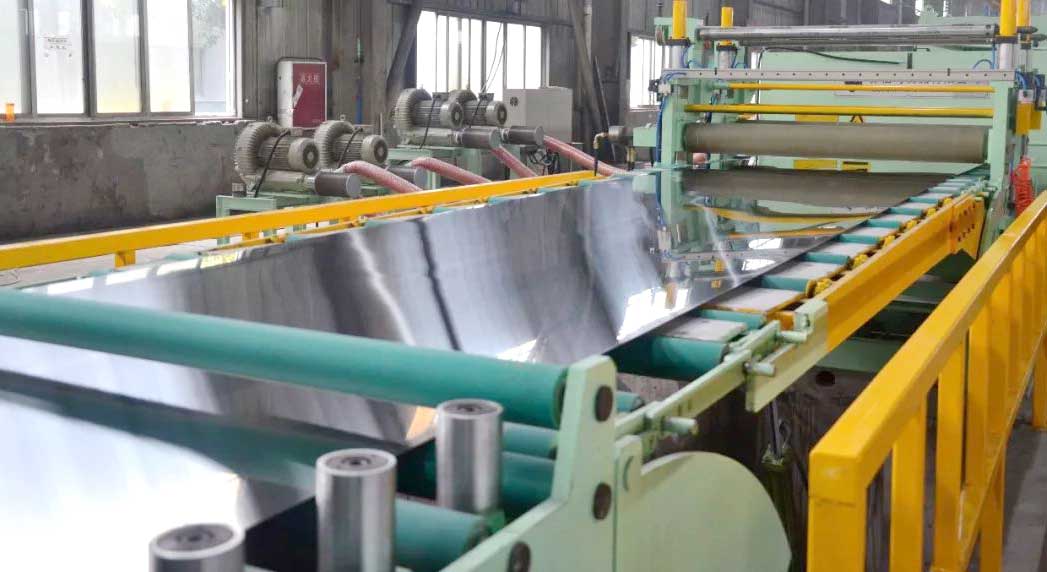
Across China, numerous stainless steel industrial parks and manufacturing clusters are accelerating construction, commissioning, and capacity expansion. The industry is gradually shifting from simple capacity growth toward integrated industrial chains, leading companies, coordinated development, and higher-value manufacturing.
For manufacturers of stainless steel water tanks, industrial storage tanks, and other stainless steel products, this development means that China’s stainless steel raw material and processing supply chain is becoming more comprehensive, providing a stronger manufacturing base for large-scale engineering projects.
In the past, China’s stainless steel industry focused primarily on nickel-iron smelting, stainless steel production, hot rolling, and basic sheet and coil manufacturing. As competition has increased, more industrial parks are extending their operations into cold rolling and downstream deep processing.
In 2026, many new projects are focused on stainless steel cold rolling, seamless pipes, welded pipes, pipe fittings, bar and wire products, precision components, stainless steel composite plates, and composite pipes.
This extension of the industrial chain can shorten the supply chain between steel mills and downstream manufacturers, improve material availability, and provide customers with a wider range of stainless steel grades, specifications, and processing options.
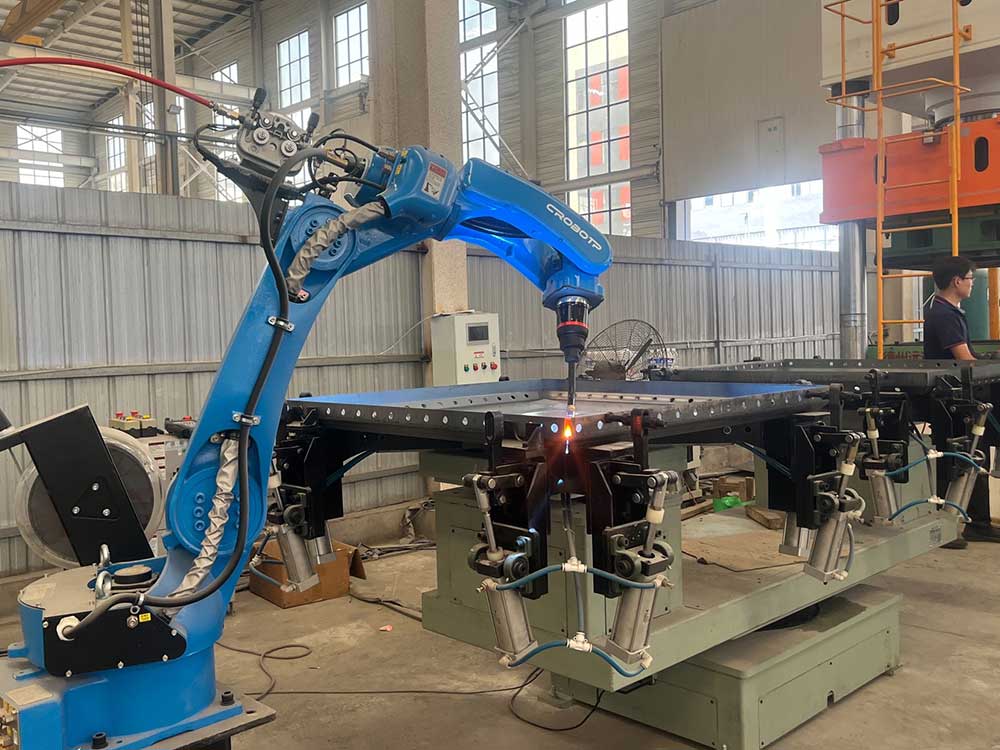
The stainless steel zero-carbon industrial park in Hezhou, Guangxi, is being developed as a manufacturing base that combines stainless steel deep processing with clean energy.
The park has a planned investment of approximately RMB 3.5 billion and covers about 2,000 mu. Its main focus is stainless steel deep processing, supported by wind power, solar power, and energy storage systems.
The first phase has completed part of its land development and has attracted high-precision stainless steel cold rolling companies, energy storage businesses, and stainless steel deep-processing manufacturers.
This development reflects an important trend in the stainless steel industry: combining material production with clean energy while using industrial clusters to improve manufacturing efficiency and reduce logistics costs.
The stainless steel industry in Naiman Banner, Inner Mongolia, is developing an integrated supply chain covering nickel-iron smelting, stainless steel hot rolling, and cold rolling.
A 200,000-ton-per-year stainless steel cold rolling project started construction in 2025 and entered trial production in 2026. The project further improves the local stainless steel production chain by adding cold rolling capacity.
For downstream stainless steel manufacturers, a more complete regional supply chain can reduce transportation links and improve the availability and delivery efficiency of cold-rolled stainless steel coils and sheets.
Zhouning in Fujian is another important example of stainless steel industrial cluster development.
In 2026, a project operated by Fujian Tsingshan Special Steel entered full operation, focusing on stainless steel seamless pipes, welded pipes, and pipe fittings while adopting intelligent manufacturing technologies.
The local stainless steel industrial park has developed a substantial group of enterprises and is continuing to expand into stainless steel pipes and higher-value-added products.
The development of stainless steel pipe manufacturing is particularly relevant to food processing, pharmaceuticals, chemicals, construction, and water treatment, while also strengthening the supply chain for stainless steel engineering equipment.
Linyi, Shandong, is developing a new high-end stainless steel industrial cluster.
Local projects cover high-end stainless steel bars and wire products, seamless pipes, stainless steel composite plates, and composite pipes.
High-end stainless steel seamless pipe projects cover multiple specifications and focus partly on replacing imported products. At the same time, stainless steel composite material projects are further expanding the regional deep-processing supply chain.
This industrial structure not only increases the range of stainless steel products available locally but also makes specialized materials more accessible to downstream manufacturers.
Dainan in Xinghua, Jiangsu, has long been one of China’s major stainless steel industrial clusters.
In 2026, a precision component aggregation center with a planned investment of approximately RMB 5.18 billion began construction. The project focuses on a special alloy precision processing center and is expected to attract high-end stainless steel strip and precision component manufacturers.
This represents a clear shift in industrial development.
Dainan is gradually moving from:
Stainless steel raw materials → Standard products
toward:
Stainless steel materials → Precision processing → High-end components → Finished products
Fuling, Chongqing, is developing high-end stainless steel cold rolling and deep-processing capabilities.
A 700,000-ton-per-year stainless steel cold rolling and deep-processing project has begun construction, while another 300,000-ton-per-year stainless steel precision processing project has also been introduced.
Once completed, these projects will increase high-end stainless steel cold rolling capacity in western China and help establish a more complete regional stainless steel supply chain.
For industrial companies in western China, the development of local cold rolling and deep-processing capacity can help reduce logistics costs and lead times associated with sourcing stainless steel from coastal regions.
The second phase of the Tsingshan stainless steel deep-processing industrial park in Jingjiang, Jiangsu, is progressing with multiple downstream projects.
The industrial park is bringing together companies across the stainless steel supply chain, with products including stainless steel coils, strips, and high-performance stainless steel pipes.
This “raw materials → intermediate products → finished products” model creates a closer regional supply chain and improves the overall competitiveness of the industrial cluster.
Fu’an’s Wanwu Peninsula in Fujian is one of China’s important stainless steel industrial clusters.
Tsingshan’s 1,780 mm stainless steel hot-rolled wide-strip production line has entered operation, with a designed annual capacity of approximately 3 million tons of hot-rolled stainless steel wide strip.
At the same time, the region continues to develop stainless steel cold rolling, titanium alloy materials, and other high-end material projects.
From a supply-chain perspective, Fu’an is developing an increasingly complete industrial system covering basic materials, hot rolling, cold rolling, and high-end new materials.
Tieshan Port in Beihai, Guangxi, has already established a substantial stainless steel production base and continues to introduce deep-processing projects.
A 300,000-ton-per-year stainless steel deep-processing project is being developed with facilities covering manufacturing, warehousing, logistics, and green energy.
The development model in Beihai is similar in some respects to that of Hezhou, with both regions using industrial clusters and cleaner energy systems to strengthen their stainless steel manufacturing capabilities.
Yangjiang, Guangdong, has a distinctive stainless steel industry closely connected with downstream manufacturing.
The local knife and scissors industry generates significant demand for 400-series stainless steel. As a result, stainless steel projects in the region are strengthening high-quality 400-series material production, pickling, and precision processing capabilities.
This represents another development model for the stainless steel industry:
Stainless steel production → Cold rolling/pickling → High-end materials → Knife, scissors, and hardware manufacturing
Closer cooperation between raw material producers and downstream manufacturers can improve the efficiency of the entire industrial chain.
The continued development of stainless steel industrial clusters has a direct impact on stainless steel water tank manufacturers.
Modular stainless steel water tanks commonly use SUS304 or SUS316 stainless steel.
SUS304 offers a good balance of corrosion resistance, mechanical performance, and cost, making it widely used for potable water, commercial buildings, industrial water storage, and food-related applications.
SUS316 contains molybdenum and generally provides better corrosion resistance in chloride-containing environments, coastal areas, and certain industrial applications.
As China’s cold-rolled stainless steel industry continues to expand, downstream water tank manufacturers can benefit from a more mature supply chain for stainless steel sheets and coils.
Stainless steel modular water tank panels typically undergo stamping, forming, flange processing, hole machining, and surface finishing.
Stable cold-rolled sheet quality is therefore important for the dimensional accuracy, surface quality, and forming performance of the finished panels.
For large modular water tanks, consistent raw material quality also helps manufacturers control material variations between different production batches.
The development of stainless steel industrial parks does not only increase steel production capacity. It also supports related industries such as:
As a result, stainless steel water tank manufacturers can operate within a more developed industrial ecosystem and source or process supporting components more efficiently.
The development of multiple stainless steel industrial projects in 2026 shows a clear direction for the Chinese stainless steel industry.
Competition is gradually moving away from simply asking:
“Who has more steel production capacity?”
and toward:
“Who can build a more complete, efficient, and competitive industrial chain?”
From Fu’an and Zhouning in Fujian to Linyi in Shandong, Dainan in Jiangsu, and Hezhou and Beihai in Guangxi, different regions are developing stainless steel clusters with their own industrial advantages.
The continued development of these industrial clusters is expected to strengthen China’s supply chain capabilities in stainless steel sheets, coils, pipes, components, and finished products.
For international engineering projects, this means Chinese manufacturers can increasingly provide not only stainless steel raw materials but also product design, precision processing, modular manufacturing, and engineering support.
For stainless steel water tank manufacturers, reliable SUS304 and SUS316 material supply, a mature processing supply chain, and increasingly advanced manufacturing capabilities will remain important foundations for competing in global engineering projects.
Oudrey focuses on modular stainless steel and galvanized steel water tanks for industrial, commercial, fire protection, and water storage applications. By combining engineering support with China’s established stainless steel supply chain, manufacturers can provide customized tank solutions for different capacities, materials, and project requirements.
In 2026, China’s stainless steel industry is moving from traditional raw material production toward cold rolling, precision processing, pipes, components, and finished products, creating a more integrated supply chain.
As basic stainless steel production capacity continues to expand, competition is shifting from simple capacity growth toward higher value-added products, processing capabilities, and supply chain integration.
Industrial clusters integrate resources such as stainless steel sheets, pipes, fittings, fasteners, and processing services, helping improve material supply stability while reducing procurement and logistics time.
SUS304 offers good corrosion resistance and cost performance and is widely used for potable water, commercial buildings, and industrial water storage. SUS316 provides better resistance to chloride corrosion and is suitable for coastal areas and certain more corrosive environments.
A developed stainless steel processing supply chain provides more stable access to sheets, pipes, and supporting components. It also helps improve panel dimensional accuracy, forming quality, and overall manufacturing efficiency.