Email: info@oudreywatertank.com
Whatsup: +86159 1014 5521
Since 2026, against the dual backdrop of rising global trade protectionism and deep adjustments in China’s domestic steel industry, the traditional export-oriented model has faced increasing challenges. Building overseas production bases, strengthening technical cooperation, expanding capacity abroad, and exporting industrial standards are becoming key strategies for Chinese steel companies seeking deeper participation in global competition.
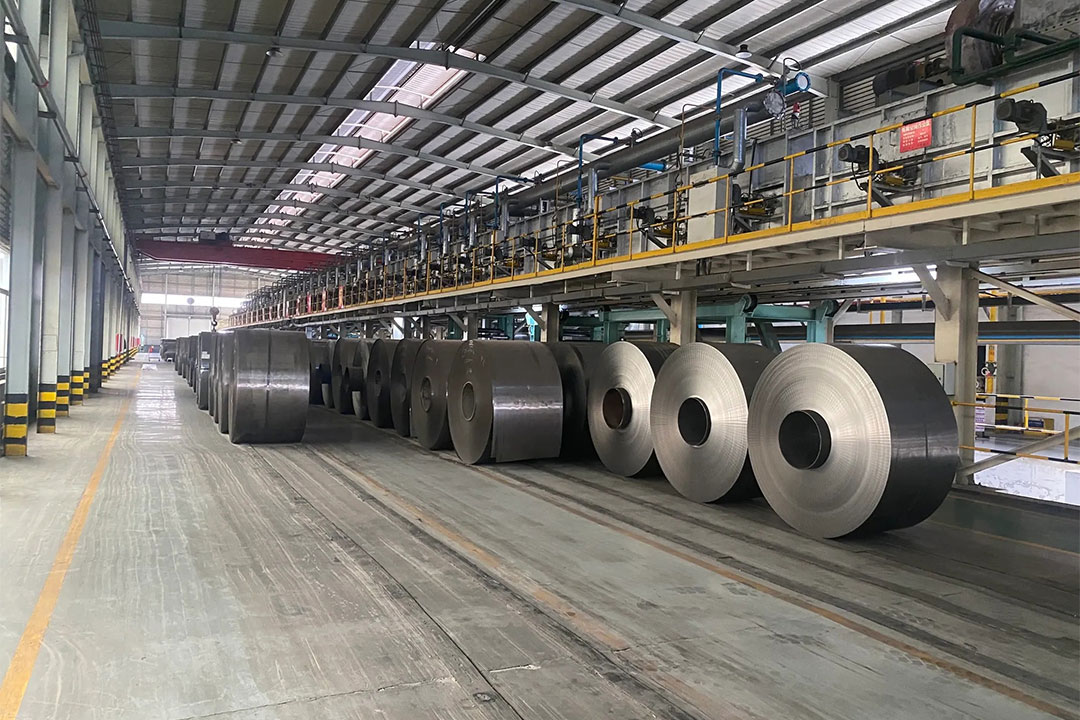
China’s steel industry is gradually shifting from simply “exporting products” to “exporting technology, capacity, and standards,” marking a new phase of international development.
Recently, Sinosteel International has emerged as one of the leading examples of China’s steel technology going global. In June 2026, the company signed a contract with global steel giant ArcelorMittal to build a new 320-ton dual-station ladle refining furnace, along with material handling and dust collection systems, for its Dunkirk steel plant in France. The project is part of ArcelorMittal’s “XCarb” global decarbonization program, with Sinosteel International responsible for engineering design, equipment manufacturing, supply, and commissioning guidance.
As one of France’s largest steel production facilities, the Dunkirk plant project marks a significant milestone for Chinese steel engineering and equipment, demonstrating the ability of Chinese technology to enter the European Union’s high-end low-carbon steel market.
At the same time, Sinosteel International has also achieved a breakthrough in the Caucasus region. On June 4, Azerbaijan Metallurgical Company and Sinosteel Equipment Co., Ltd. signed a basic engineering contract for a 2-million-ton hot briquetted iron (HBI) project. With a total investment of approximately US$800 million, the project will adopt the advanced ENERGIRON ZR direct reduction process, reducing carbon emissions by around 60% compared with traditional blast furnace production and retaining the potential for future green hydrogen integration. It is the first low-carbon metallurgical project in the Caucasus region.
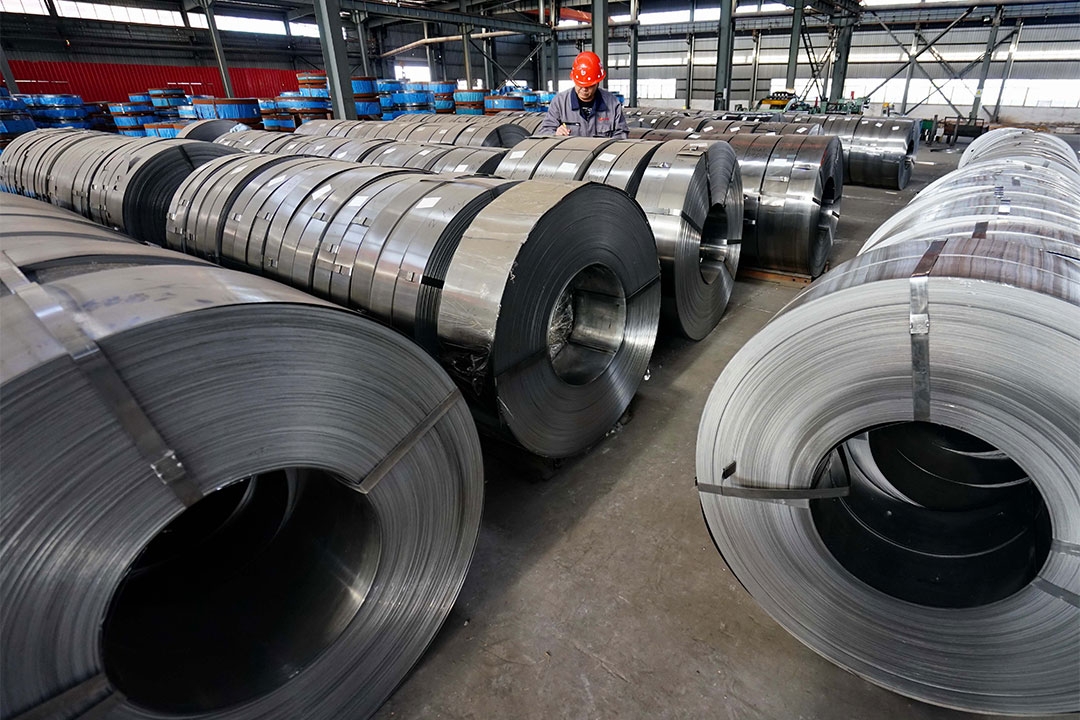
Chinese steelmakers continue to secure high-value international orders.
Shandong Iron & Steel successfully signed a 10,000-ton order for American-standard H-beams, which will be used in an automotive supplier park project in the Middle East. By providing customized material solutions for the region’s high temperatures and sandstorm conditions, the company further enhanced the competitiveness of Chinese structural steel products.
Shagang Group’s 9% nickel steel also won a supply contract for a large LNG storage tank project in Türkiye. Designed specifically for ultra-low-temperature environments of minus 163°C, the steel demonstrates China’s growing strength in high-end specialty materials for the global energy industry.
In addition, Angang’s independently developed SA-537M CL.1 steel plates for pressure vessels have been supplied to key Belt and Road energy projects, while Shougang’s 28-meter ultra-long wind power steel products have successfully entered the Southeast Asian market for the first time.
Beyond technology and product exports, Chinese steel companies are accelerating the establishment of overseas manufacturing bases.
Baosteel is moving forward with its heavy plate plant project in Saudi Arabia, the world’s first green, low-carbon, fully integrated heavy plate production facility, primarily serving the Middle East and North African markets.
In Southeast Asia, preparations have begun for the Indonesia steel-coke integrated project led by CIMC Enric, with Nanjing Iron & Steel among the participating investors. Dexin Steel Indonesia, invested by Delong Steel, has already become one of the largest single overseas steel projects developed by Chinese enterprises, and the company is discussing a new 3-million-ton green steel project with Indonesia’s state-owned Krakatau Steel.
In Africa, the New Peak Steel Project in Egypt continues to progress as a landmark China-Egypt industrial cooperation project. It is Egypt’s first integrated steel project utilizing the electric arc furnace short-process route and represents another milestone in China’s participation in Africa’s industrial development.
As Chinese steelmakers deepen their global footprint, the international supply capability of high-end and green steel products continues to improve. This not only strengthens the competitiveness of China’s steel value chain but also creates new opportunities for downstream manufacturing industries.
For sectors such as pressure vessels, energy storage equipment, construction structures, wind power equipment, and stainless steel water tanks, the establishment of overseas steel production bases and the expansion of high-end material supply systems will help reduce raw material procurement risks, improve supply chain stability, and accelerate the adoption of high-strength steel and corrosion-resistant stainless steel.
Particularly in the Middle East, Africa, and Southeast Asia, where infrastructure investment continues to grow rapidly, demand for building water supply, fire protection storage, industrial water storage, and municipal water systems is increasing steadily. The globalization of China’s steel industry is expected to further stimulate overseas demand for stainless steel water tanks, galvanized steel tanks, BDF composite tanks, and large modular water storage systems, creating new growth opportunities for Chinese equipment manufacturers and solution providers.