Email: info@oudreywatertank.com
Whatsup: +86159 1014 5521
Modular insulated stainless steel water tanks combine durable stainless steel with polyurethane insulation for better thermal control.
From the perspective of modular water tanks, you may be very familiar with GRP/FRP, hot-dip galvanized, and stainless steel water tanks. However, it is rare to see modular insulated water tanks in the international market. Why is this? This is mainly related to climate conditions, industrial requirements, and local standards.
The three common types of modular sectional water tanks are mainly used for normal-temperature water storage. They are selected according to actual requirements such as water quality, cost, installation site, and environmental conditions.
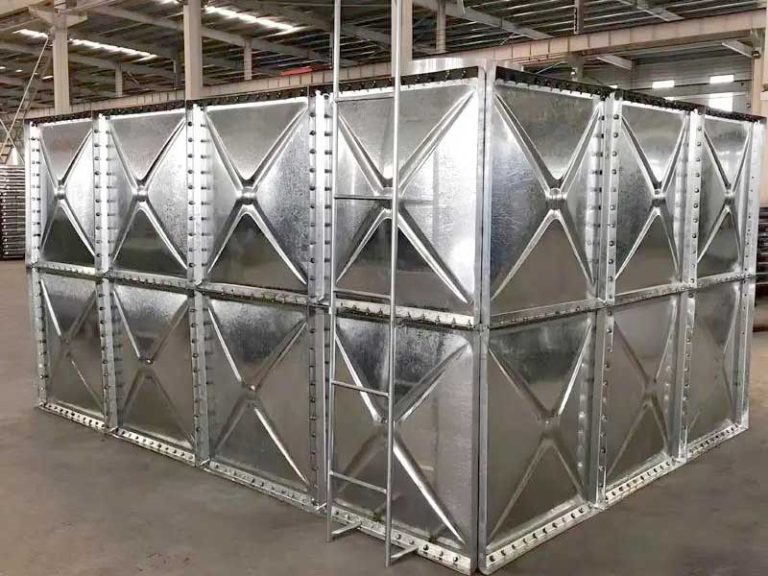
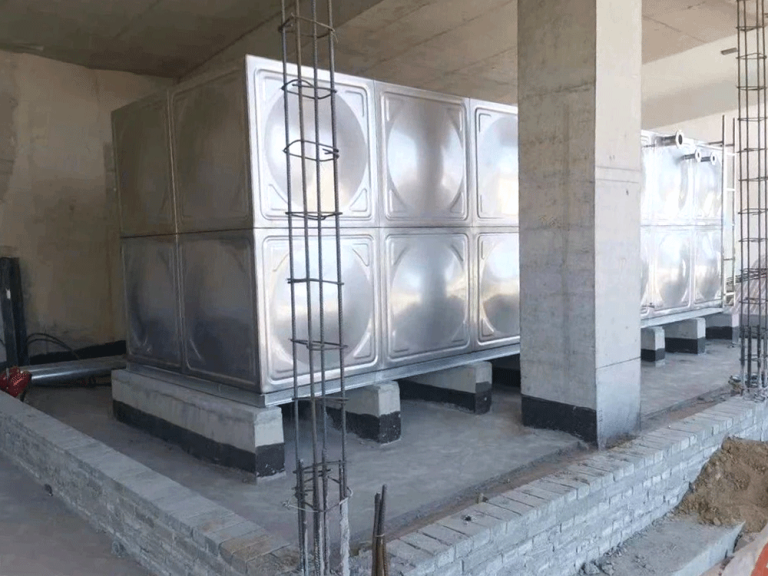
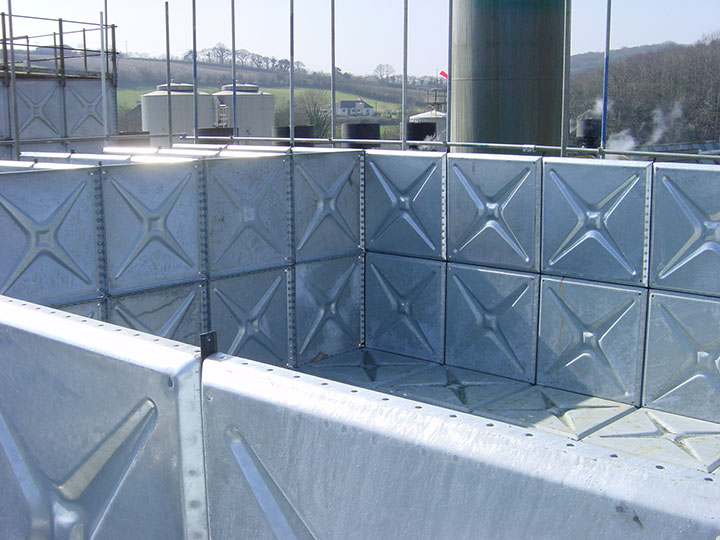
Simply speaking, if there are high requirements for water quality or drinking water applications, you can directly choose a stainless steel water tank. If high corrosion resistance and low cost are required, especially in coastal environments, a GRP/FRP water tank is a good choice. If high structural strength and low cost are required, a hot-dip galvanized water tank is also a good choice.
If you have requirements for thermal insulation, which type of water tank should you choose?
The answer is simple: choose a modular insulated stainless steel water tank.
What is the difference between an ordinary stainless steel water tank and an insulated stainless steel water tank?
Actually, the answer is very simple. An insulated water tank only adds a certain thickness of polyurethane insulation layer to the outside of the stainless steel water tank.
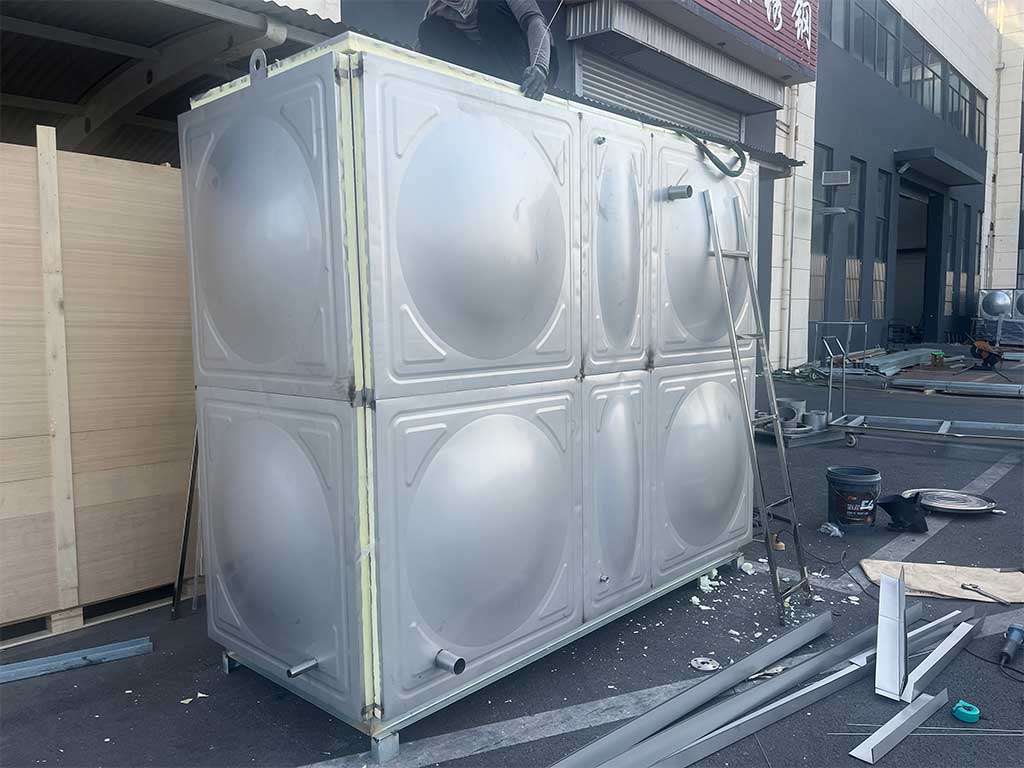
You can directly see the difference in the pictures.
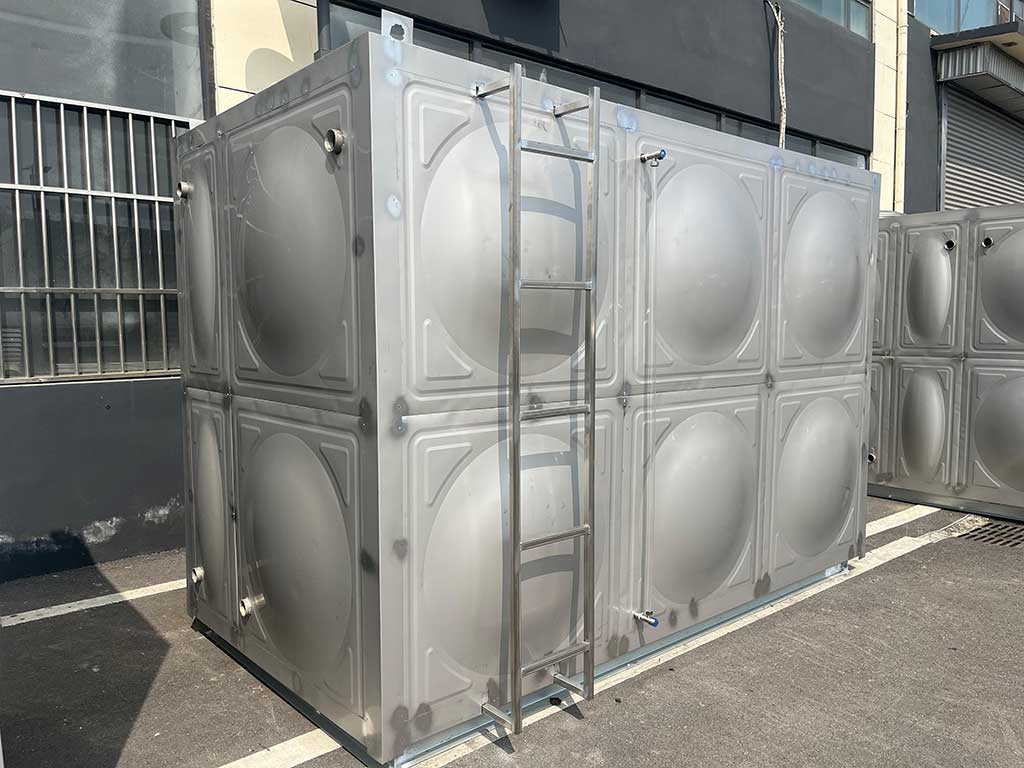
Stainless Steel Sectional Insulated Water Tanks
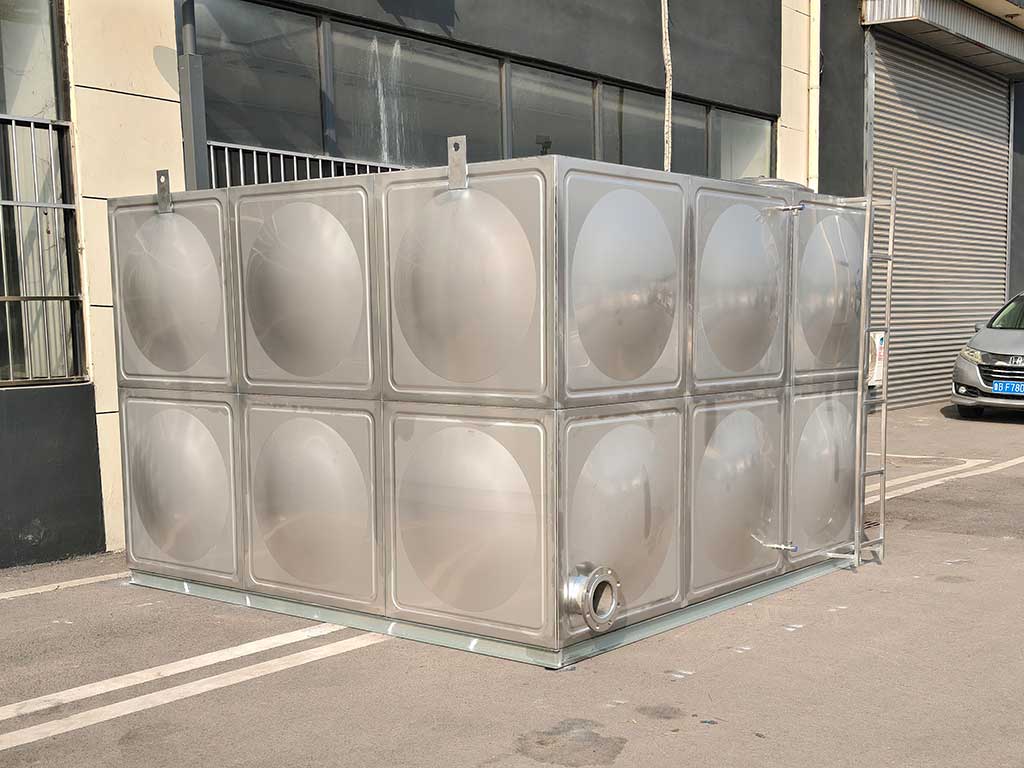
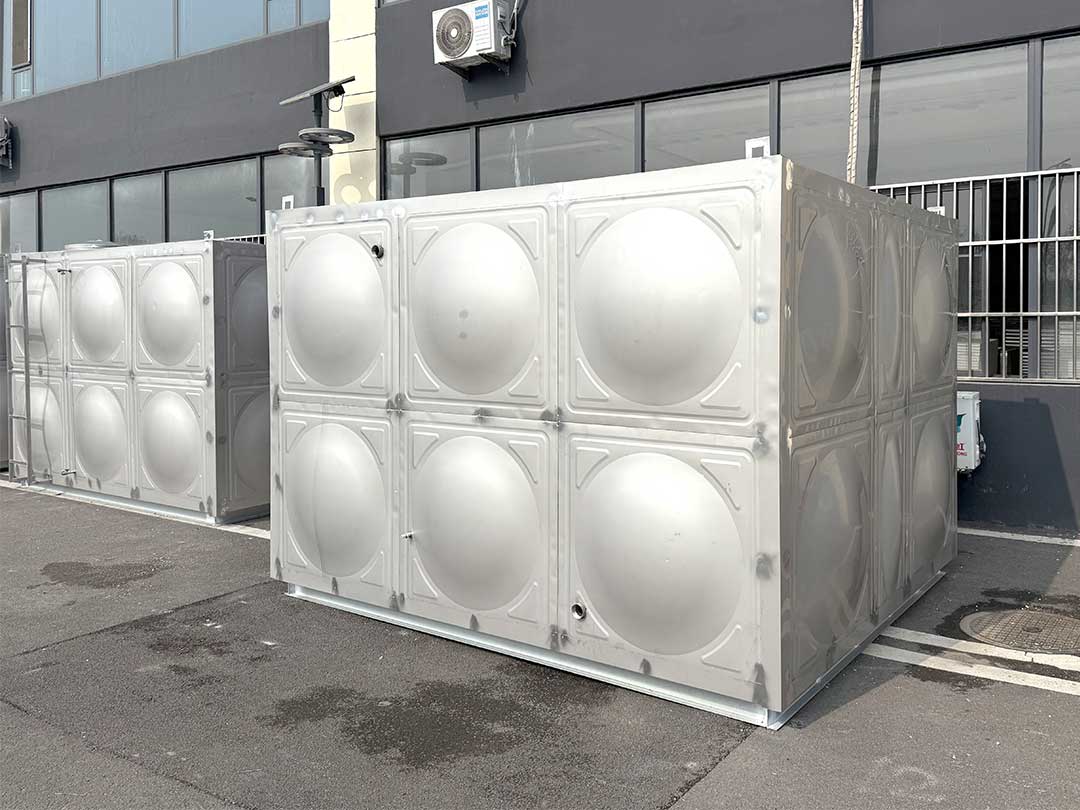
Standard Stainless Steel Sectional Water Tank
Let’s start with a conventional modular stainless steel water tank.
From the perspective of installation methods, stainless steel water tanks can be divided into bolted connection and welded connection. Both installation methods have their own characteristics.
From the perspective of a water tank material supplier, however, welded water tanks actually have more advantages. The structure is more stable, the appearance is better, the interior is easier to clean, and the required panel thickness is lower than that of bolted tanks.
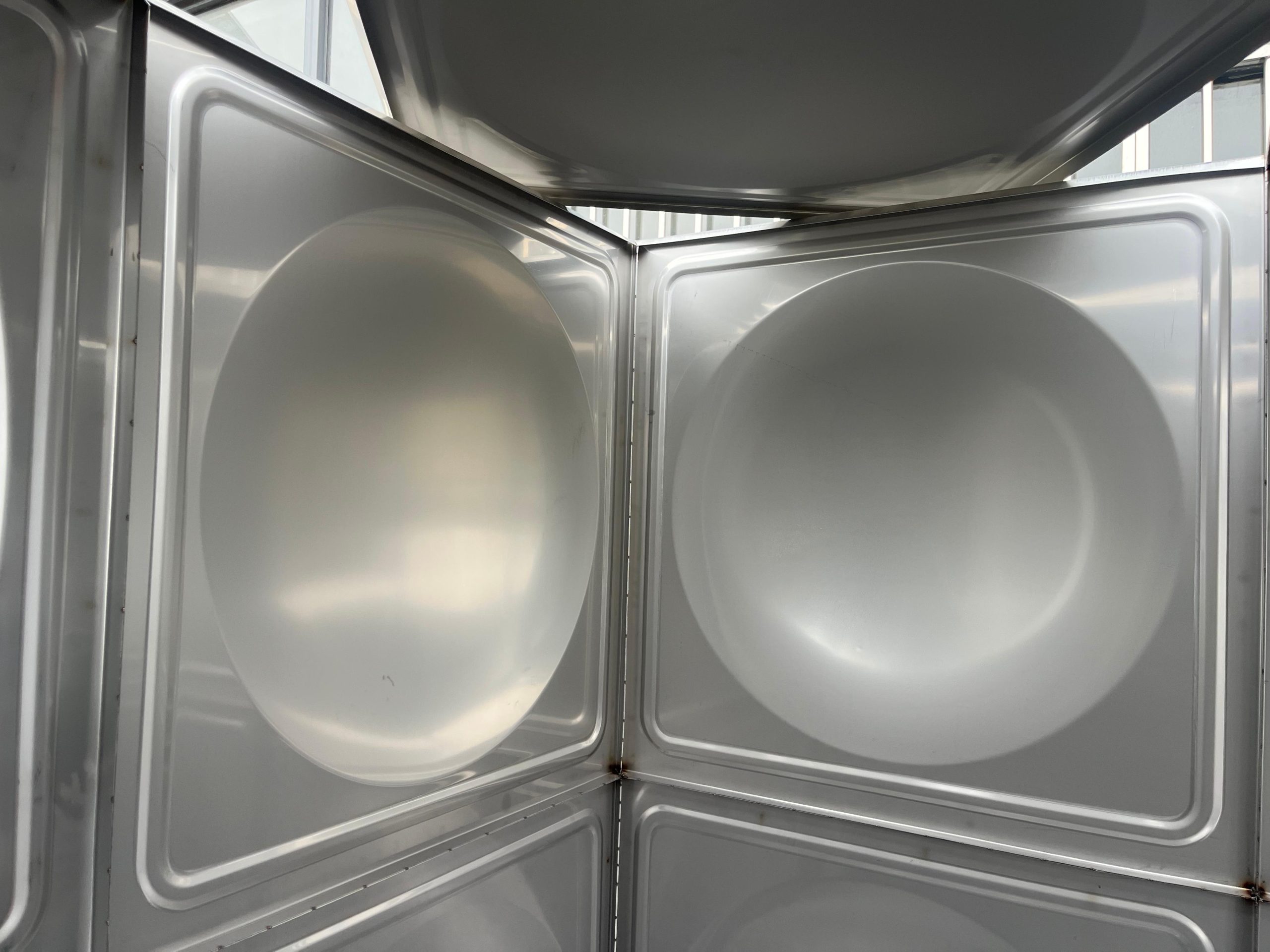
An insulated stainless steel water tank is made by adding an insulation layer to the outside after the ordinary stainless steel water tank has been welded.
The insulation layer is also made of modular panels. Its dimensions are consistent with the stainless steel water tank panels, both measuring 1 × 1 m.
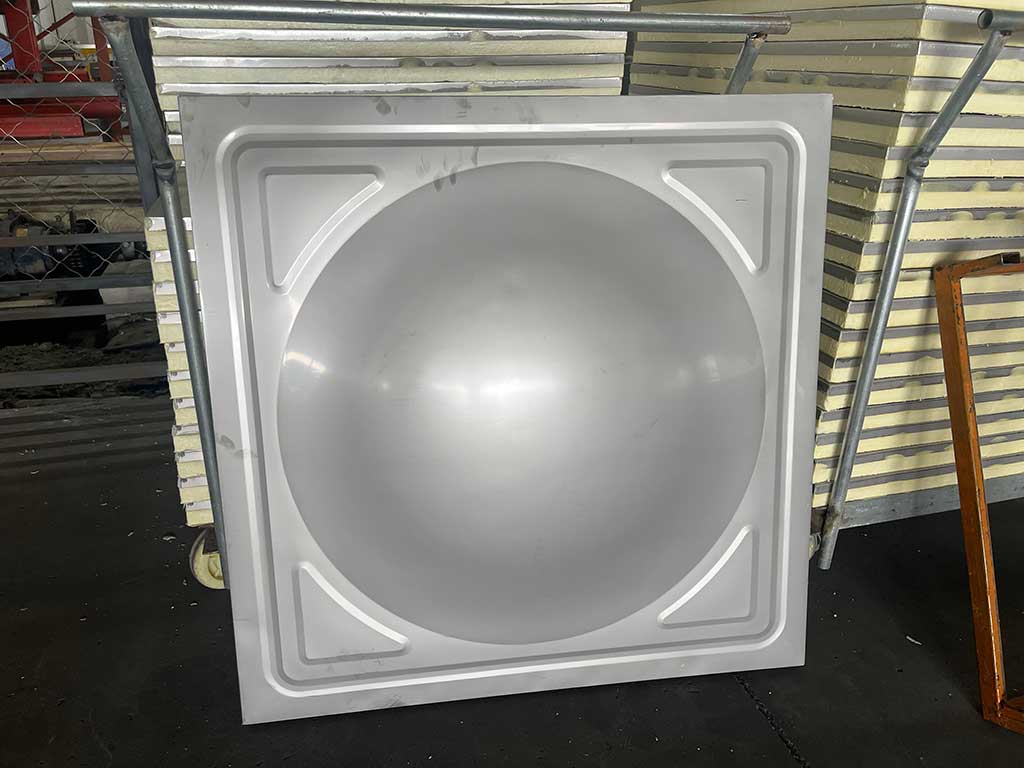
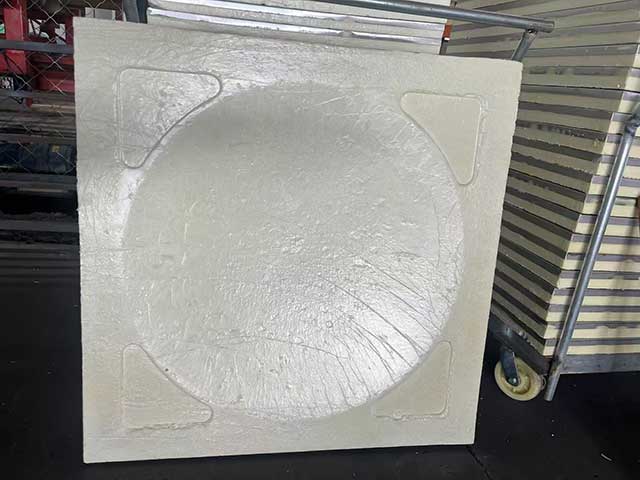
When installing the insulation layer, each insulation panel is directly matched with the corresponding stainless steel panel. Stainless steel pieces are only required to be welded at the panel joints to connect the tank body with the insulation layer.
According to the positions of the tank inlet, outlet, overflow outlet, and other connections, openings are made in both the insulation layer and the tank body. Then, accessories such as flanges, level gauges, and valves are installed.
Finally, the ladder, inspection hatch, lifting lugs, and other accessories are installed, and the edges and corners are covered with color-coated steel sheet.
After installation, the insulated water tank looks almost the same as an ordinary stainless steel water tank from the outside.
You may be wondering: What material is the insulation panel made of?
The insulation panel is made by bonding polyurethane and a color-coated steel outer shell together.
The appearance of the color-coated steel outer shell is the same as that of a conventional stainless steel panel, but its strength and thickness are lower. Its thickness is generally 0.3–0.5 mm.
It is mainly used to attach and support the polyurethane material, prevent the polyurethane from being directly exposed to the environment and oxidized, and provide sealing at the same time.
This helps keep the temperature inside the insulation layer and provides better thermal insulation for the water tank.
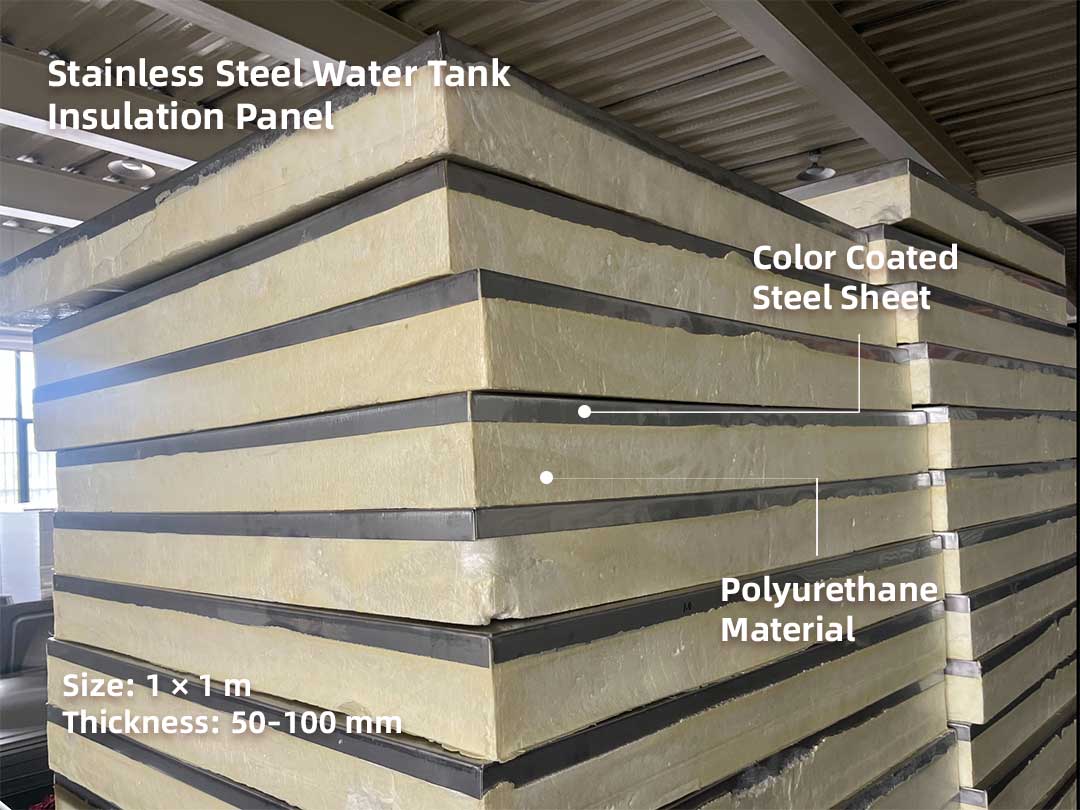
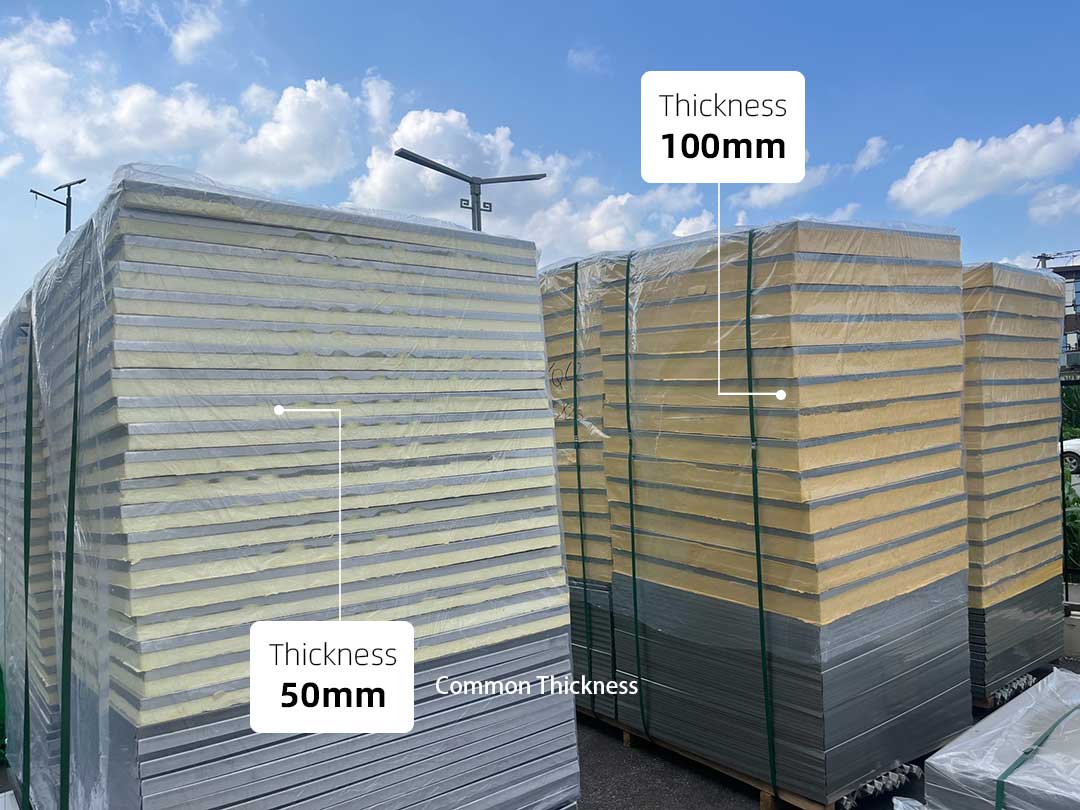
The thickness of the polyurethane layer is selected according to the climate conditions and temperature requirements.
It is generally 5–10 cm thick, with 5 cm and 10 cm being the most common thicknesses.
After curing, polyurethane has a dense texture and stable structure. When bonded with the color-coated steel layer, it provides very good thermal insulation performance and durability.
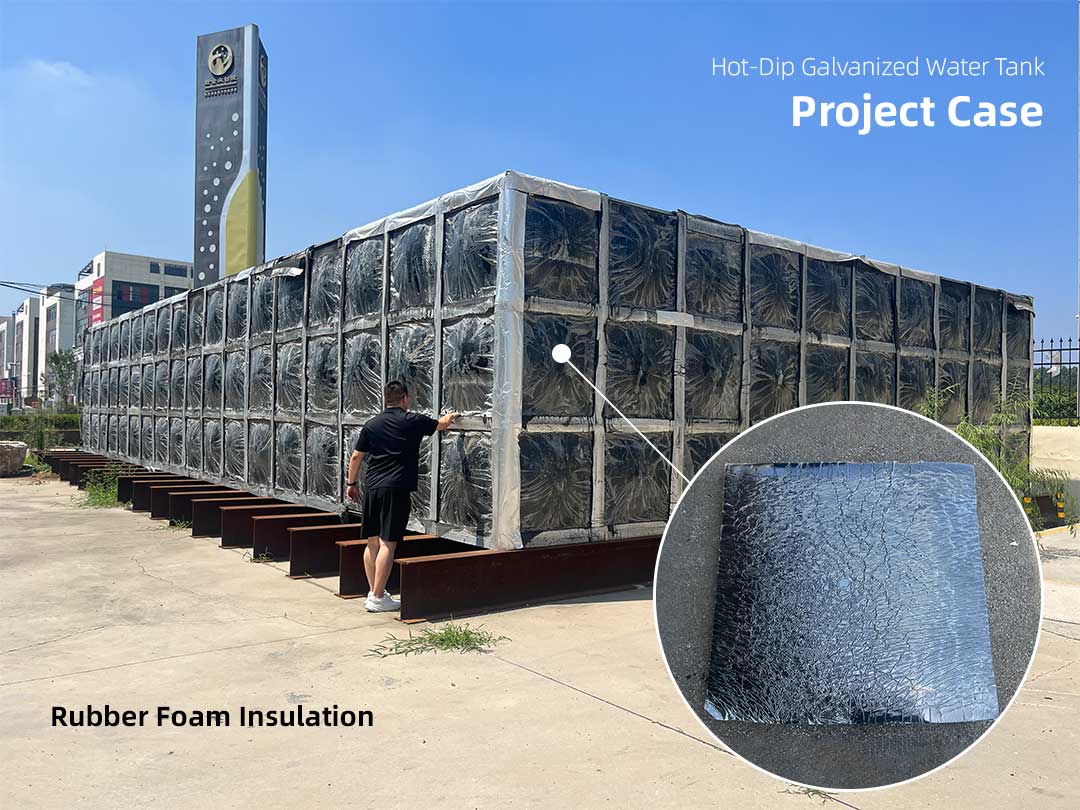
Although GRP/FRP, hot-dip galvanized, and bolted stainless steel water tanks can also be fitted with insulation layers, they generally use rubber-plastic foam and relatively simple connection methods.
These insulation systems mainly provide functions such as water resistance, condensation prevention, dust protection, and impact resistance, while their thermal insulation performance is relatively average.
Therefore, if you have a requirement for an insulated water tank, a modular insulated stainless steel water tank is certainly the best choice.
Oudrey Water Tank is the largest stainless steel water tank factory in northern China. In addition to hot-dip galvanized and GRP/FRP water tanks, our stainless steel water tank panels have significant advantages in terms of material customization, engineering projects, and pricing.
The insulated stainless steel water tank materials we produce have strong demand in temperate regions, cold environments, and industrial production applications requiring thermal insulation.
We can provide you with a complete water tank solution. What are you waiting for?
The main difference is whether an insulation layer is added to the outside. An insulated stainless steel water tank adds a polyurethane insulation layer to the outside of the standard stainless steel tank to reduce heat transfer and help maintain the water temperature.
The insulation layer mainly consists of polyurethane and a color-coated steel outer shell. Polyurethane provides the main thermal insulation performance, while the outer steel shell protects and supports the polyurethane and also provides sealing.
The polyurethane insulation layer is generally 5–10 cm thick, with 5 cm and 10 cm being the most common options. The appropriate thickness can be selected according to the local climate, ambient temperature, and insulation requirements of the project.
Yes. GRP/FRP, hot-dip galvanized, and bolted stainless steel sectional water tanks can also be fitted with external insulation. However, different insulation materials and installation methods provide different levels of thermal insulation performance and overall performance.