Email: info@oudreywatertank.com
Whatsup: +86159 1014 5521
Explore water tank panel structures, surface finishes, and colors to choose the right material for different applications.
Many buyers often find that water tank panels have different surface structures, textures, and colors when purchasing water tanks, but they are not sure how to choose the right option. In this article, we will provide a detailed explanation of these differences from the aspects of panel structure, surface treatment, and material characteristics.
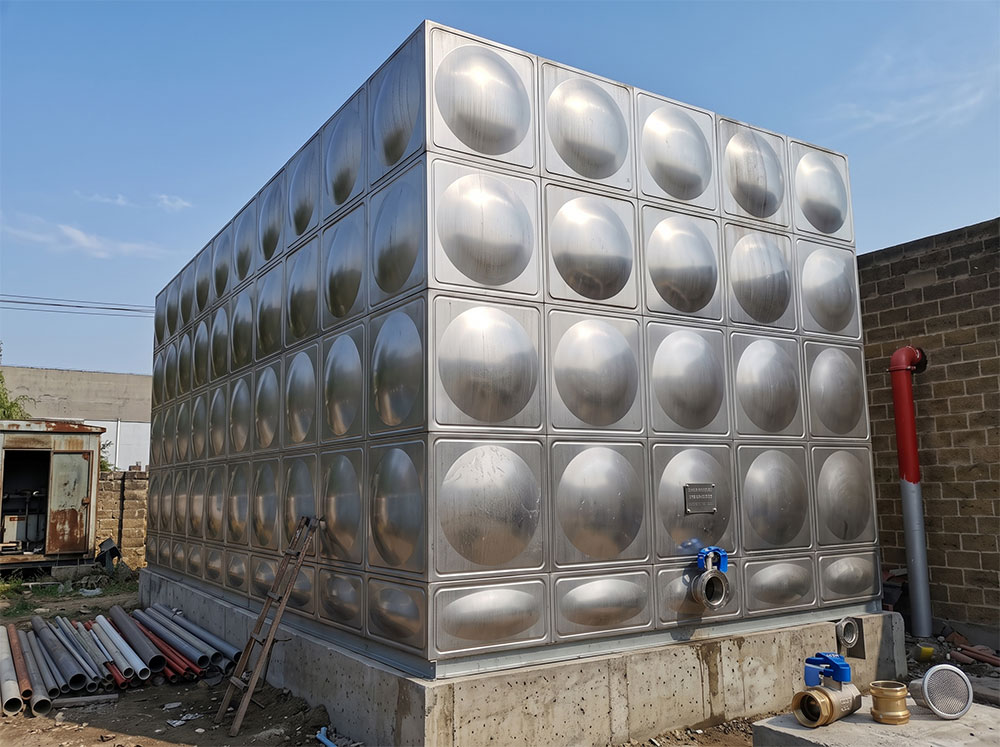
Common water tanks on the market include:
To increase panel structural strength and improve the load-bearing capacity of water tanks, manufacturers usually use pressing and forming technology to change the original flat structure of steel panels.
The common embossed panel designs mainly include:
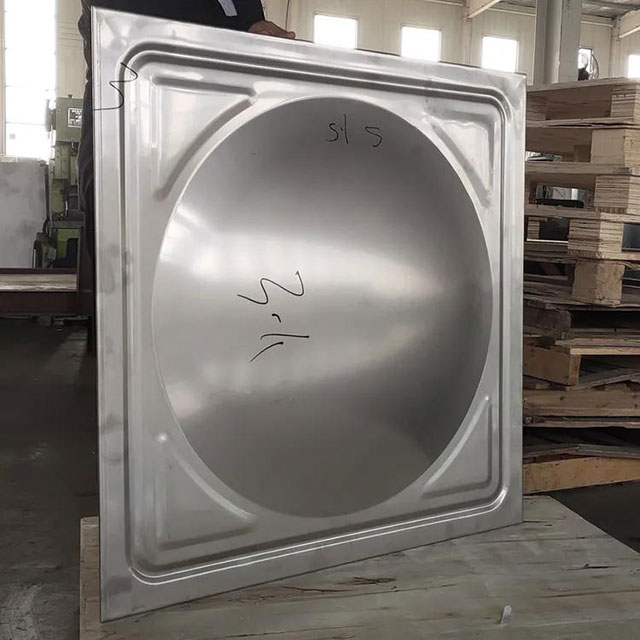
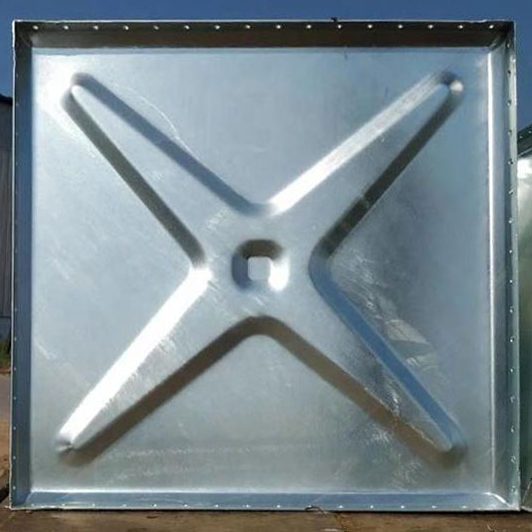
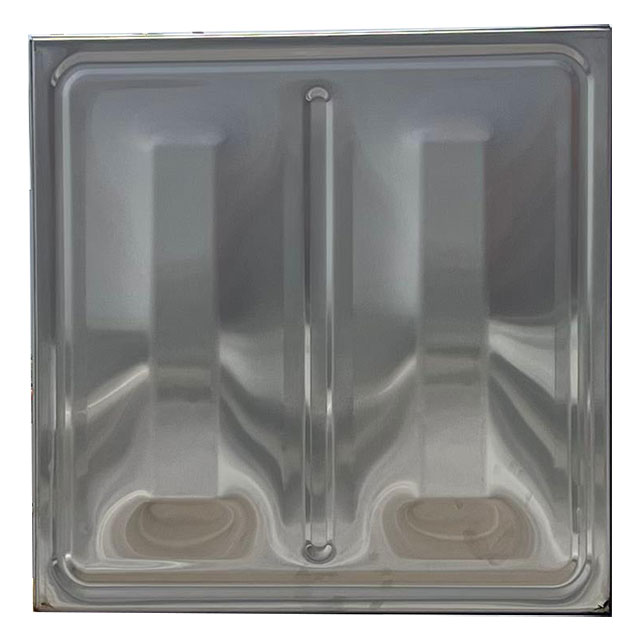
Different manufacturers may have slightly different designs depending on their molds and production processes.
After pressing, the water tank panels form reinforced structures or embossed patterns, which can effectively improve:
The actual pressure-bearing capacity depends on multiple factors, including:
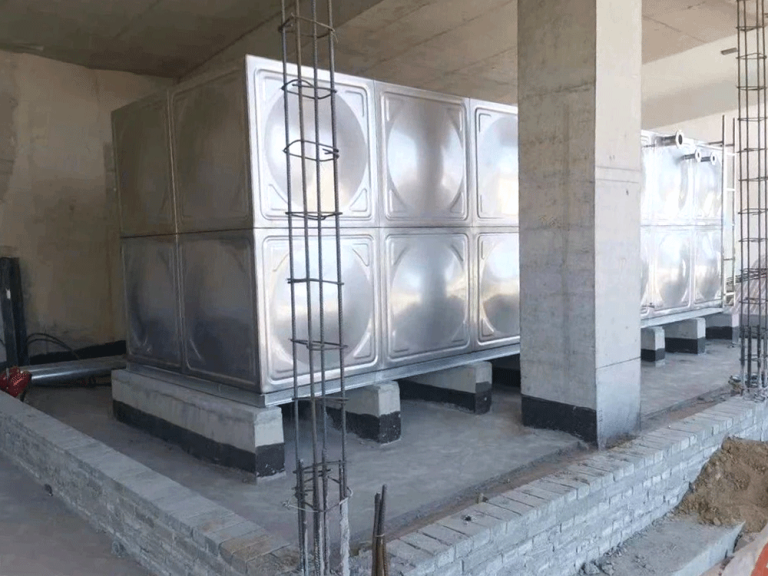
For SUS304/SUS316 stainless steel water tank panels, the common surface finishes include:
The differences mainly include:
Brushed stainless steel is also known as satin finish or hairline finish. The surface has uniform fine lines, does not reflect strong light, and provides a soft metallic appearance.
It is usually produced through:
to create one-directional or cross-brushed textures.
✅ Strong scratch resistance
✅ Less fingerprint visibility
✅ Strong industrial appearance
❌ Lower gloss level
❌ Surface textures may collect dust and require regular cleaning
In practice, brushed stainless steel is currently the most widely used surface finish for modular stainless steel water tanks.
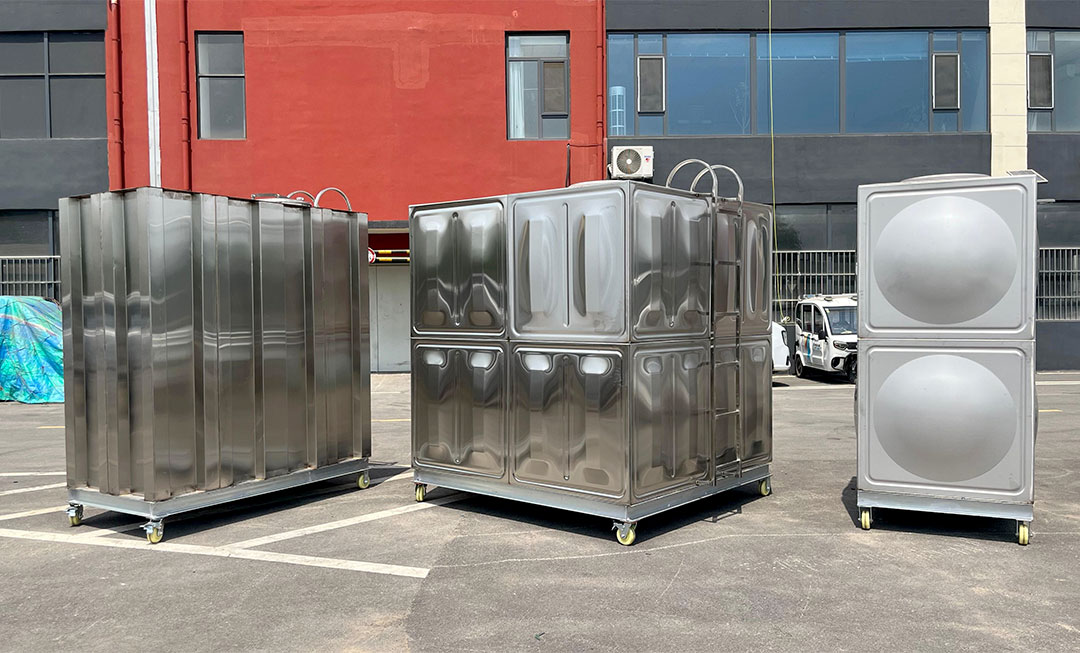
Mirror stainless steel has a highly polished surface that can clearly reflect surrounding objects like a mirror.
Common grades include:
It is produced through multiple polishing processes:
to achieve a high reflective surface.
✅ Luxury and high-end appearance
✅ Very smooth surface
✅ Excellent visual effect
❌ Easily shows fingerprints
❌ Scratches are more visible
❌ Higher processing cost
For water tanks, mirror stainless steel is generally not recommended for large-area applications. It is more suitable for special projects requiring premium appearance.
Colored stainless steel is not ordinary painted steel. The mainstream process is usually:
PVD Vacuum Coating (Physical Vapor Deposition)
Under a vacuum environment, metal ions such as:
are deposited onto the stainless steel surface to create different colors.
Common colors include:
Colored stainless steel is not widely used in standard water tank manufacturing. It is mainly applied to:
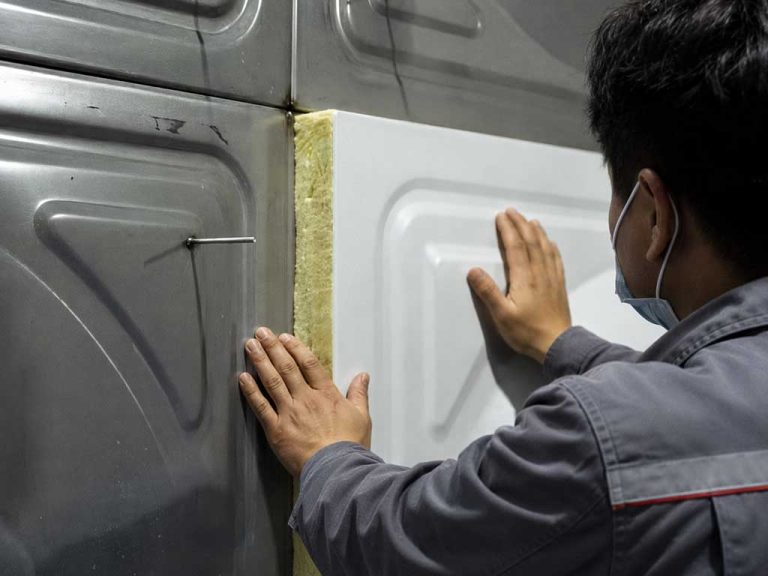
Because insulated tank panels mainly protect the insulation layer and do not require extremely high structural strength, colored steel sheets are also suitable as external protective panels.
For water tanks, colored steel panels are usually available in:
which are visually similar to SUS304/SUS316 stainless steel.
Q235A is a type of ordinary carbon structural steel defined under China’s national standard (GB/T 700). It is widely used in:
In the water tank industry, Q235A is mainly used as the base material for:
The meaning of Q235A:
Q represents the yield strength grade of the steel.
235 means the yield strength is approximately 235 MPa, indicating that the steel can withstand about 235 MPa stress before permanent deformation occurs.
Q235A is a low-carbon steel with characteristics such as:
After physical pressing and forming, its structural rigidity and pressure resistance can be significantly improved.
In the water tank industry, the most common colors are:
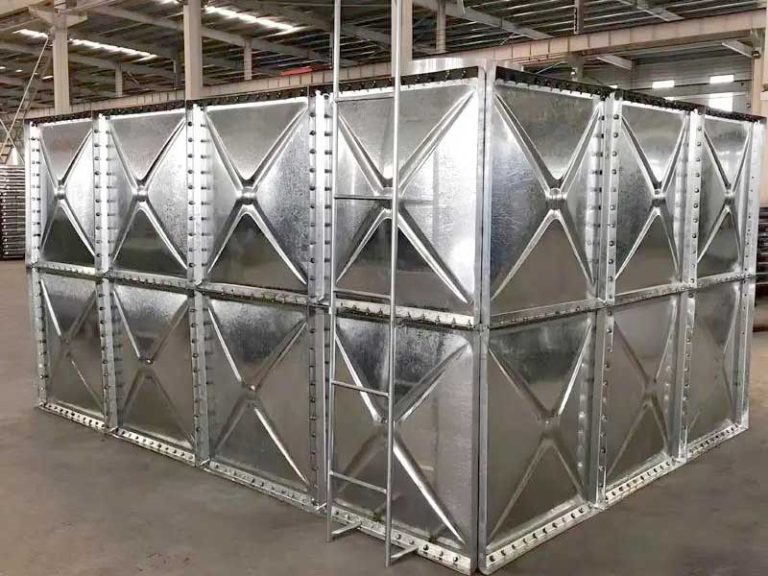
After hot-dip galvanizing, a zinc protective layer is formed on the surface. The surface may have fine spangle patterns, providing excellent corrosion resistance.
It is commonly used for:
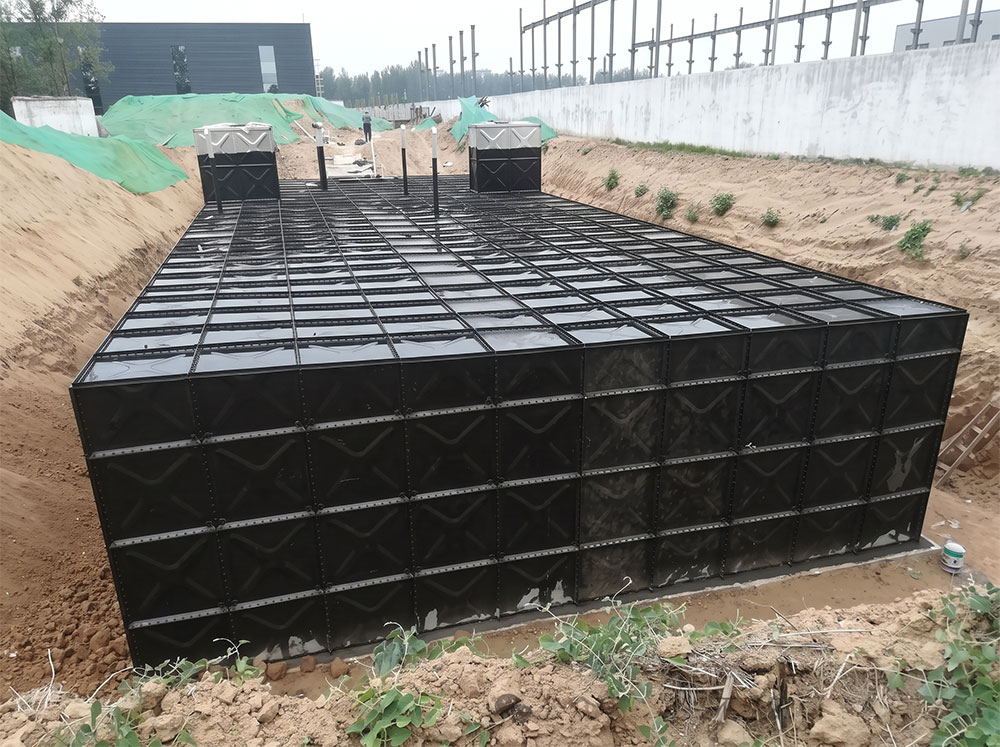
BDF composite water tanks are usually used in special environments or underground water storage applications, especially where high pressure, high humidity, and corrosion resistance are required.
The external surface is usually black.
So, what is the difference between the black surface and common silver-gray materials?
The black color is not the original color of the panel. Instead, a layer of black bituminous coating is applied to the surface to provide additional protection.
This is currently the most commonly used color for underground water tank protection.
| Item | Q235A Carbon Steel | SUS304 Stainless Steel |
|---|---|---|
| Material Type | Ordinary carbon steel | Austenitic stainless steel |
| Corrosion Resistance | Relatively weak | Excellent |
| Original Color | Dark gray | Silver-white |
| Need for Anti-corrosion Treatment | Required | Usually not required |
| Strength | High | High |
| Cost | Low | High |
| Processing Performance | Good | Good |
From low cost to high cost:
⬇️
SUS304 Brushed Finish
↓
SUS316 Brushed Finish
↓
SUS304 Mirror Finish
↓
SUS316 Mirror Finish
↓
SUS304 PVD Colored Finish
↓
SUS316 PVD Colored Finish
| Application Environment | Recommended Material | Recommended Surface |
|---|---|---|
| General Building Water Supply | SUS304 | Brushed Finish |
| Fire Water Tank | SUS304 | Brushed Finish |
| Food Factory | SUS304/SUS316 | Brushed Finish |
| Coastal Area | SUS316 | Brushed Finish |
| Hospital Pure Water System | SUS316L | Mirror / Brushed Finish |
| Hotel Decorative Water Tank | SUS304 | PVD Colored Finish (Less Common) |
For Oudrey modular stainless steel water tanks in overseas markets, the most common configuration is:
SUS304 + No.4 Brushed Finish
Reasons:
As one of the top modular water tank manufacturers in China, Oudrey provides customized solutions and installation services for various water storage systems, including:
Looking for a reliable water tank supplier? Choose Oudrey for professional manufacturing, customization, and project support.
Pressing water tank panels into circular, X-shaped, or chocolate-pattern structures can improve panel rigidity, enhance water pressure resistance, and reduce deformation during operation.
Brushed stainless steel offers better scratch resistance, reduced fingerprint visibility, and easy maintenance. Its professional appearance makes it the most commonly used surface finish for modular stainless steel water tanks.
Mirror stainless steel provides a high-reflection and premium appearance, but it is more likely to show fingerprints and scratches. Due to its higher processing cost, it is generally used for special projects with higher appearance requirements.
Q235A is a type of ordinary carbon steel with lower cost and high strength, but it requires anti-corrosion treatment such as hot-dip galvanizing or protective coatings. SUS304 stainless steel provides better corrosion resistance and usually does not require additional anti-corrosion treatment, making it more suitable for drinking water and high-demand applications.
BDF composite water tanks are mainly used for underground water storage applications. The black bituminous coating improves waterproofing, corrosion resistance, and protection against soil corrosion, extending the service life of the tank in underground environments.