Email: info@oudreywatertank.com
Whatsup: +86159 1014 5521
On January 13, 2026, the World Steel Association released the Indirect Steel Trade Data Report (2014–2024), providing a comprehensive analysis of global steel trade through downstream manufactured products.
On January 13, 2026, the World Steel Association released the Indirect Steel Trade Data Report (2014–2024), providing a comprehensive analysis of global steel trade through downstream manufactured products.
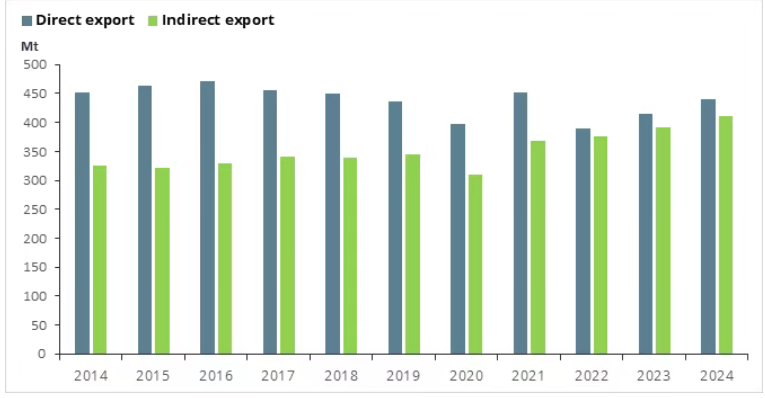
According to the report, between 2014 and 2024, indirect steel exports (measured in finished steel equivalent) from 74 countries increased from 325 million tonnes to 410 million tonnes, representing a cumulative growth of 26% over the decade. This highlights a structural shift toward exports of manufactured goods rather than raw steel products.
In 2024, global indirect steel trade volume reached 93% of direct steel exports, underscoring the growing importance of indirect trade in the global steel circulation system. This trend is closely linked to deeper global manufacturing specialization and the international expansion of downstream steel-consuming industries.
From a time perspective, direct and indirect steel exports generally grew in tandem between 2014 and 2024. However, indirect exports demonstrated greater stability, partially offsetting volatility in direct steel trade during certain years.
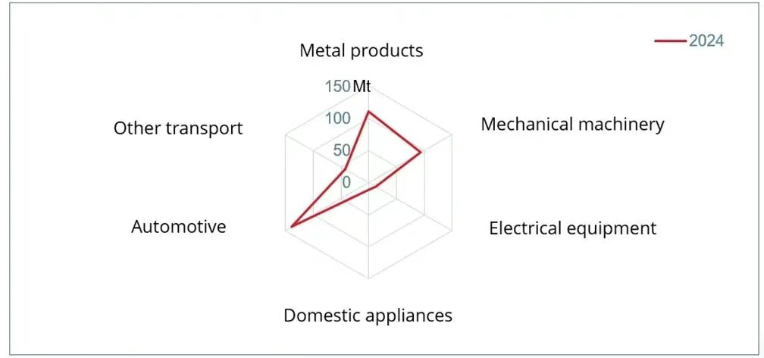
By sector, indirect steel exports are mainly concentrated in machinery, automotive, metal products, household appliances, and other manufacturing industries. Automotive and machinery remain the two largest absorbers of indirect steel exports, indicating that steel demand is increasingly embedded in higher value-added manufacturing activities.
Amid the continued expansion of global indirect steel trade, stainless steel fabricated products are becoming an increasingly important vehicle for steel participation in international trade.
Stainless steel water tanks are widely used in building water supply systems, municipal water infrastructure, industrial storage, fire protection systems, and new energy facilities. Their trade characteristics align closely with the definition of indirect steel trade:
As a result, stainless steel water tanks are not reflected in direct steel export data, yet changes in their export volume directly affect stainless steel consumption and total indirect steel trade.
The 26% growth in indirect steel exports from 2014 to 2024 reflects rising global demand for integrated, modular, and engineered steel products, bringing multiple benefits to the stainless steel water tank sector:
From the sectoral breakdown of indirect steel trade:
As green building standards and drinking water safety regulations continue to tighten, stainless steel water tanks are expected to increasingly replace galvanized tanks and concrete reservoirs, amplifying the impact of indirect steel trade growth on stainless steel demand.
Against the backdrop of rising indirect steel trade, stainless steel water tank manufacturers should focus on: