1. What role does a stainless steel fire-fighting water tank play in a fire water supply system?
A stainless steel fire-fighting water tank is the core storage unit in a fire water supply system. It ensures an adequate and reliable water source during emergencies or fires, providing efficient fire protection for buildings and industrial sites.
2. What stainless steel materials are available for fire-fighting water tanks?
Common materials include 304 stainless steel and 316L stainless steel:
304 stainless steel tanks: Corrosion-resistant, tough, and easy to process. Suitable for residential buildings and general industrial areas, especially where water quality is clean.
316L stainless steel tanks: Enhanced with molybdenum or lower carbon content, offering better resistance to pitting and crevice corrosion. Ideal for coastal areas, chemical plants, and environments with weakly alkaline or chlorinated water.
3. What are the main components of a stainless steel fire-fighting water tank?
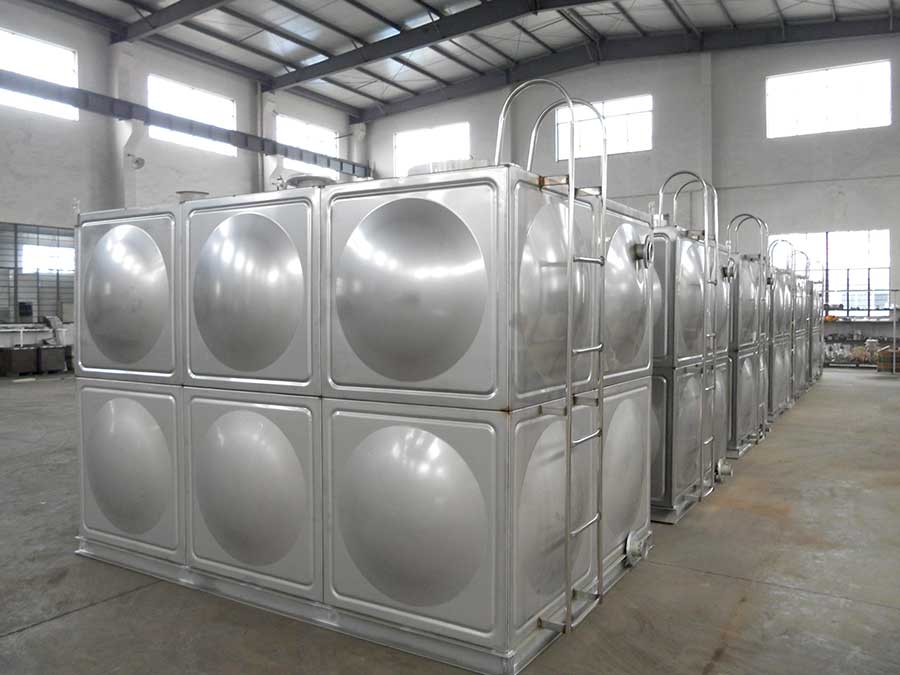
Tank body: Square or cylindrical, made of food-grade stainless steel for safe water storage.
Inlet and outlet pipes: Ensure smooth water flow to meet fire-fighting demands.
Overflow and drainage ports: Protect the tank from overflow and facilitate periodic cleaning to maintain water quality.
4. What are the advantages of stainless steel fire-fighting water tanks?
High strength: Stable structure able to withstand water pressure and external forces.
Good sealing: Prevents leaks and secondary contamination.
Easy maintenance: Smooth surfaces resist bacterial growth and are easy to clean.
Customizable installation: Tanks can be square, cylindrical, or irregularly shaped to suit site conditions and storage requirements.
5. What should be considered when installing a stainless steel fire-fighting water tank?
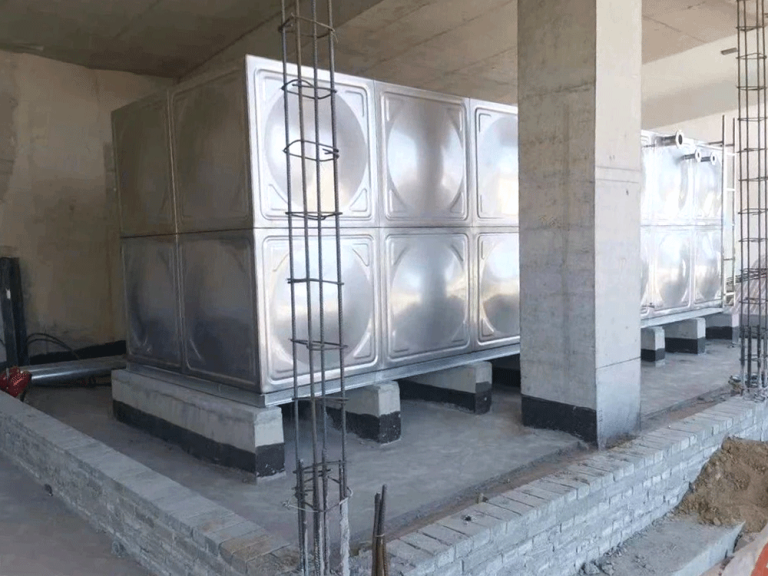
Install on a flat, solid foundation to support the full weight of the tank.
Ensure verticality and levelness of the tank to avoid tilting or deformation.
Make pipe connections secure and well-sealed to guarantee proper water flow during emergencies.
Regularly inspect inlets, outlets, and drainage ports to maintain optimal tank performance.
6. How to choose the right stainless steel material for your site?
General residential or industrial areas: 304 stainless steel is sufficient.
Coastal, chemical, or chlorinated water environments: 316L stainless steel offers better resistance to pitting and crevice corrosion.
Tank size and shape can also be customized based on water quality, climate, and installation space.
7. What is the lifespan of a stainless steel fire-fighting water tank?
304 stainless steel tanks typically last 15+ years with proper maintenance. 316L tanks last even longer. Regular cleaning and inspection of welds and pipe connections can further extend the tank’s service life.
Factory-direct water tank manufacturer providing custom design, fast quotation, and reliable quality. Suitable for industrial, commercial, and engineering projects.