Email: info@oudreywatertank.com
Whatsup: +86159 1014 5521
Learn how to test galvanized water tank coating thickness and prevent rust with effective corrosion protection methods.
For modular galvanized steel water tanks, the zinc coating is the core protective barrier against corrosion. The quality of the zinc coating directly affects the tank’s corrosion resistance, service life, and maintenance costs. Therefore, when selecting a water tank supplier and purchasing hot-dip galvanized water tanks, both manufacturers and buyers pay close attention to corrosion protection performance.
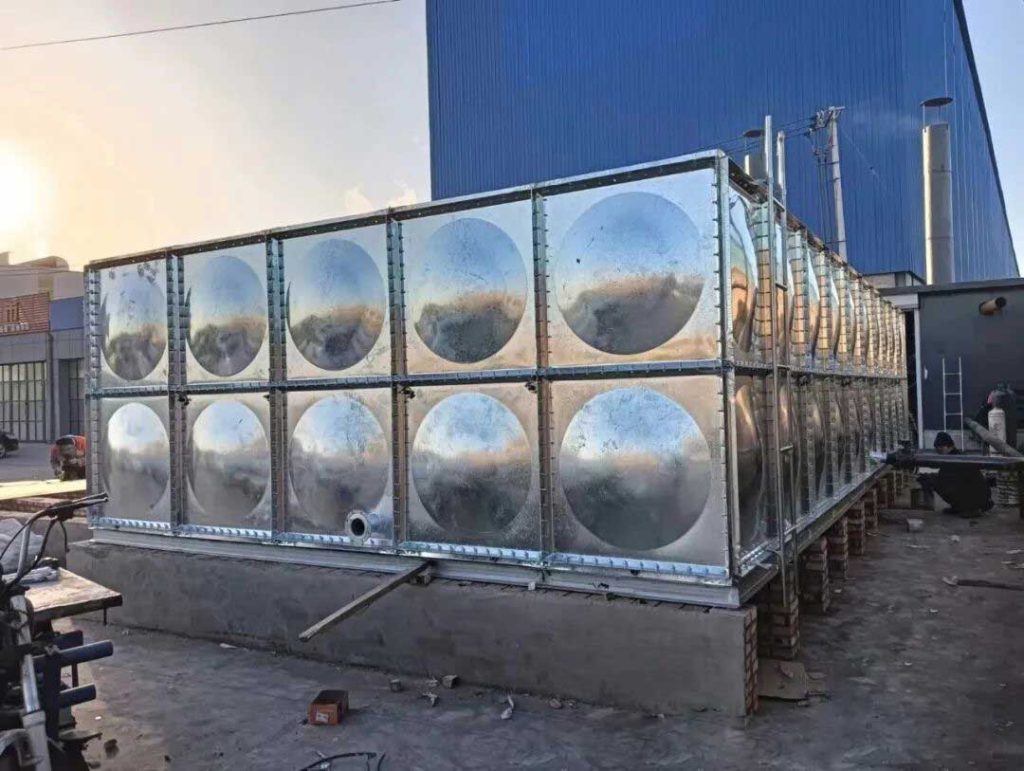
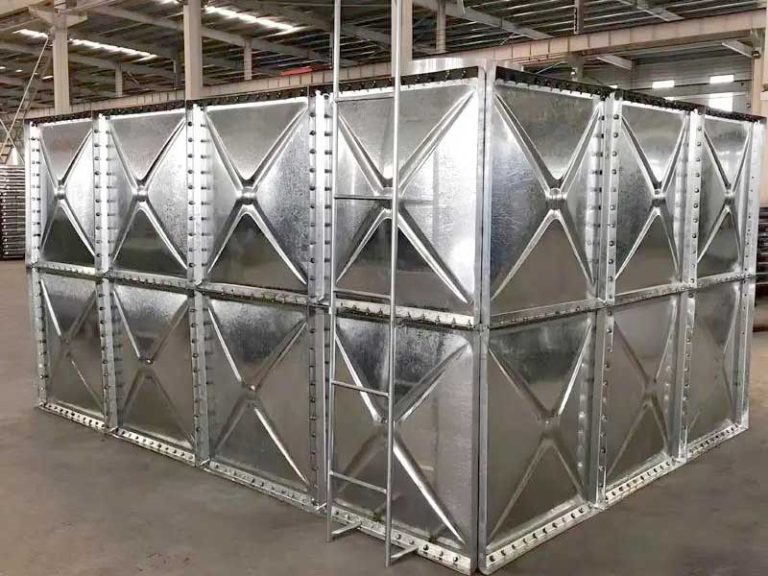
Recently, a customer from Vietnam visited our factory for inspection and also visited a hot-dip galvanized water tank project that we supplied and installed 8 years ago. The customer was satisfied with the tank’s operating condition and appearance. During the visit, the customer paid close attention to the corrosion resistance of the tank panels and asked how easily corroded components, such as bolts and sealing strips, could be protected against rust and oxidation.
So, how do hot-dip galvanized water tanks prevent rust? How should the zinc coating thickness be tested? What thickness is considered qualified? What are the differences between galvanized and hot-dip galvanized steel? What other anti-corrosion measures can be taken?
This article will provide a detailed explanation.
Steel panels used in modular water tanks are prone to oxidation and rust when exposed to humid environments for long periods. The hot-dip galvanizing process creates a continuous and dense zinc coating on the steel surface, which not only isolates the steel from air and moisture but also continues to protect the steel through sacrificial protection even if minor scratches or impacts occur.
A thicker zinc coating generally means:
Therefore, testing the zinc coating thickness is an important part of our hot-dip galvanized water tank quality inspection process.
For steel modular water tanks, galvanized and hot-dip galvanized panels are commonly used by many manufacturers. Among them, Hot-Dip Galvanized Steel usually has a zinc coating thickness of 55–85 μm, while high-corrosion-resistance products can reach 80 μm or above.
It should be noted that different countries and industry standards, such as ISO 1461 and ASTM A123, have different requirements for zinc coating thickness. The specific thickness should be determined according to project requirements and applicable standards.
For hot-dip galvanized water tanks exported by Oudrey, the common zinc coating thickness is 55–85 μm, which is one of the most widely used and reasonable ranges in the industry. The exact thickness depends on the application environment.
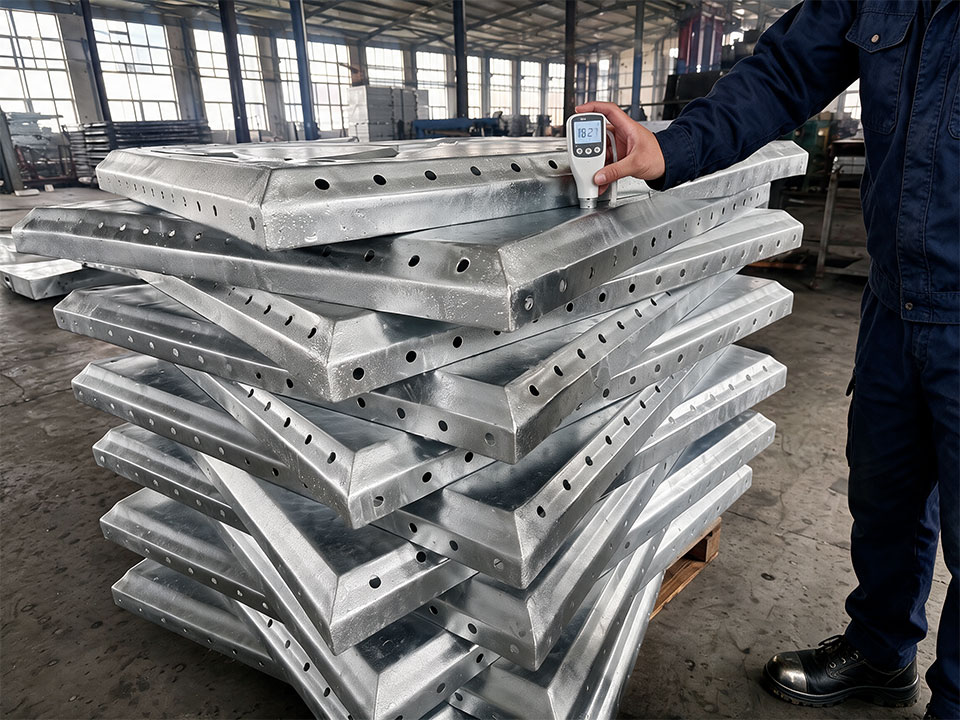
At Oudrey, all products undergo strict quality inspections before delivery. The zinc coating thickness of hot-dip galvanized water tanks is one of the key inspection criteria.
We use a Magnetic Coating Thickness Gauge for non-destructive testing.
Steel is a magnetic metal, while zinc is a non-magnetic metal. A magnetic coating thickness gauge uses magnetic induction technology to measure the changes in the magnetic field between the probe and the steel substrate, thereby calculating the zinc coating thickness.
The entire inspection process is non-destructive. A measurement can be completed within seconds by simply placing the probe on the surface. Therefore, this method is widely used for quality inspection of steel structures, hot-dip galvanized components, and steel water tanks.
Many customers see product descriptions such as “Galvanized Steel Water Tank” and “Hot-Dip Galvanized Water Tank” and assume they refer to the same product. In fact, they are produced using two completely different galvanizing processes.
Galvanized steel (usually referring to electro-galvanized steel) uses an electrochemical process to deposit a thin zinc layer onto the steel surface. It has a smooth and attractive appearance, but the zinc coating is relatively thin and is more suitable for indoor or dry environments.
Hot-dip galvanizing, on the other hand, involves immersing steel into molten zinc at approximately 450°C. The zinc reacts metallurgically with the steel to form a zinc-iron alloy layer and a pure zinc outer layer. This bonding structure provides stronger adhesion, prevents peeling, and creates a much thicker protective coating than ordinary galvanizing.
For long-term water storage equipment, hot-dip galvanizing is a more reliable corrosion protection solution.
The zinc coating is the primary corrosion protection layer of the water tank. However, the installation process and operating environment can also affect the service life of the tank.
For example:
Therefore, corrosion protection is one of the main concerns for distributors and end users.
Hot-dip galvanized water tanks are usually assembled using bolted connections. During installation, repeated tightening between bolts and nuts may cause local damage or wear to the galvanized coating, reducing corrosion resistance.
To improve the corrosion resistance of connection parts, the bolts can be galvanized after installation to restore the protective layer. Alternatively, anti-rust paint or other protective coatings can be applied to the bolt surfaces according to the actual operating environment. These methods help isolate moisture and oxygen, reduce corrosion, and extend the service life of the entire water tank system.
For projects located in coastal areas, high-humidity environments, or corrosive industrial areas, additional protection of bolt connections is especially important. It can effectively prevent local corrosion from affecting the overall structural stability and durability.
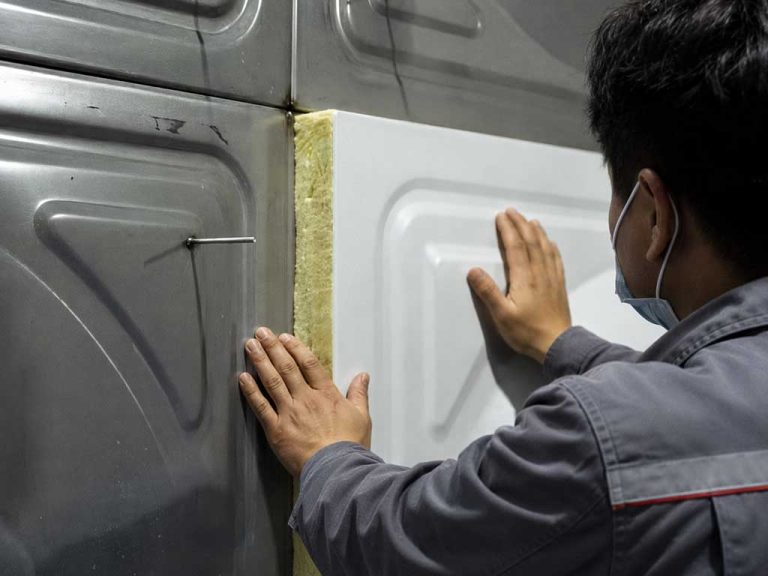
Many hot-dip galvanized water tanks are covered with a protective layer after installation. This protective layer is usually rubber foam insulation, which provides insulation, condensation prevention, waterproofing, fire resistance, and vibration reduction.
Rubber foam insulation generally consists of two layers. The core layer provides thermal insulation, while the outer plastic film improves mechanical strength and environmental resistance. During installation, the film layer faces outward to provide additional protection.
The rubber foam insulation layer can:
Compared with ordinary steel water tanks or electro-galvanized products, hot-dip galvanized water tanks offer significant advantages.
The thicker zinc coating effectively isolates moisture and oxygen. Even when the coating is locally damaged, the zinc layer continues to protect the steel through sacrificial anode protection, slowing down corrosion.
Under normal operating conditions, hot-dip galvanized water tanks can provide years of reliable service, significantly reducing repair and replacement costs.
Due to the excellent weather resistance of the zinc coating, hot-dip galvanized water tanks require less frequent repainting or corrosion treatment, reducing long-term operating costs.
Hot-dip galvanized steel maintains the high strength and impact resistance of steel while providing excellent corrosion protection. Therefore, it is widely used in:
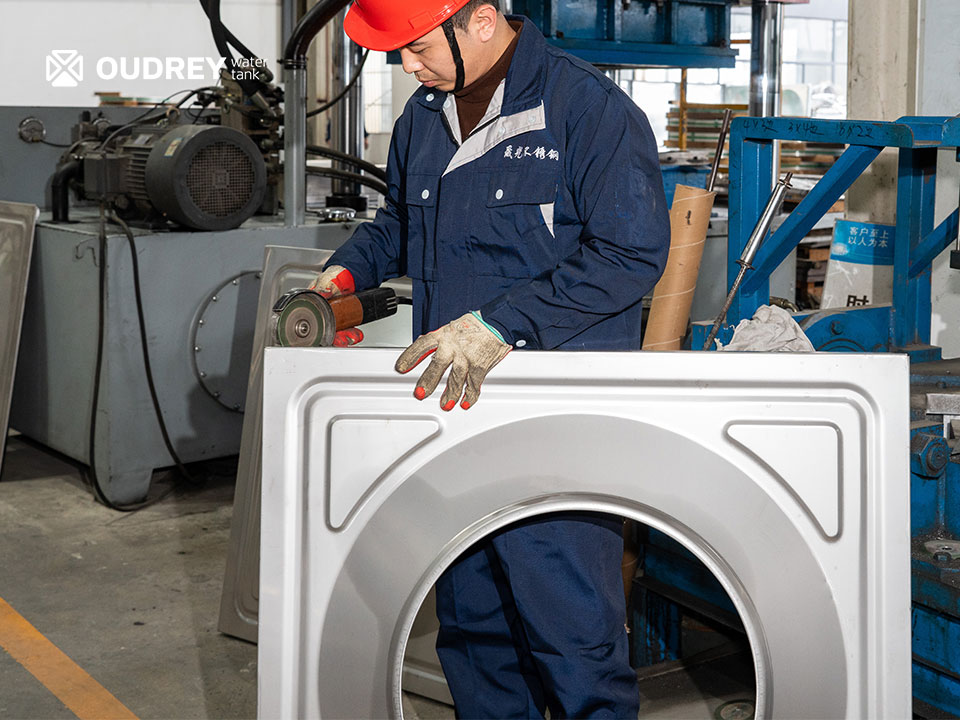
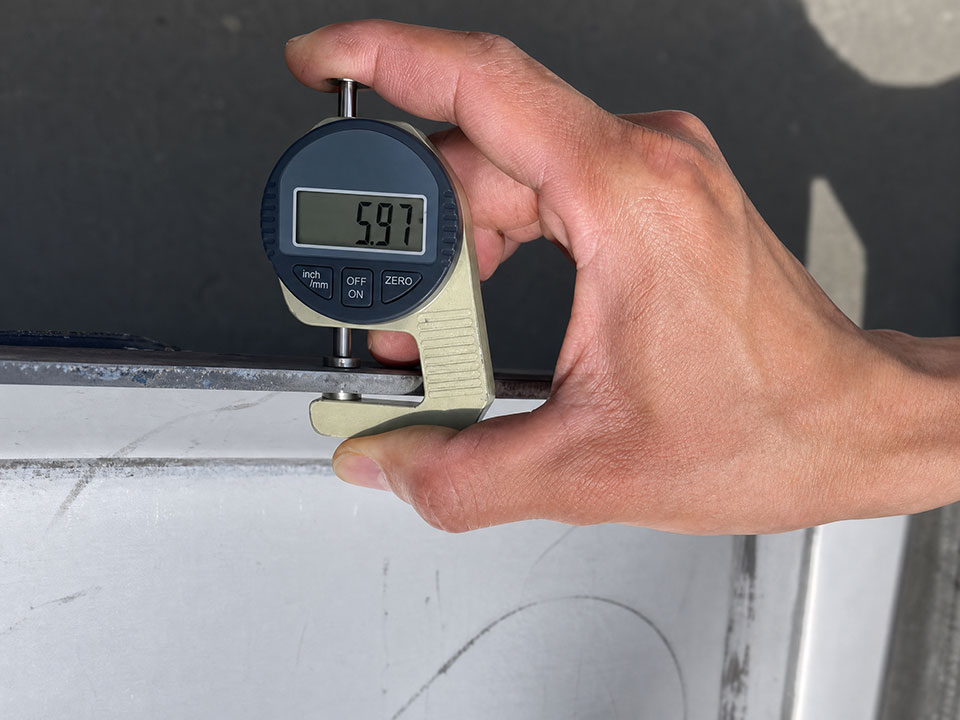
A high-quality product requires strict quality inspection, which is also the foundation for building trust with overseas customers.
As one of the leading water tank manufacturers in China, Oudrey provides high-quality products with strict quality control systems. Hot-dip galvanized water tanks are one of our key export products, offering reliable corrosion resistance and long-term performance for global customers.
If you are looking for a reliable hot-dip galvanized water tank supplier, Oudrey is your trusted choice.